
By Ollie Willis
The concept of the mercenary is ancient history at this point in time. Originating in Ancient Greece, the concept still has a prevalent impact on modern society. After a large downfall during the Renaissance, the mercenary business had mostly subsided as countries favored their own state-backed militaries instead of the freelance soldiers for hire of the past. However, during WW2, the concept was revived with mercenaries and private military contracting being at an all-time high. Post-WW2, many career soldiers found themselves out of a job or disillusioned with their country. This resulted in many individuals who were trained as soldiers not being able to do what they were trained for. For instance, the UK government decided to cut military spending from 8% to 2% of the country’s GDP after the Suez Crisis in 1956. This alongside the mass decolonisation and the UK dismantling its military presence in many countries led to many soldiers being out of a job entirely. This phenomenon was not unique to the UK and led to several Private Military Companies (PMCs) being founded, which began hiring ex-soldiers from around the world.
The 1960s were the initial trial period for these new mercenary groups and set the foundations for the modern PMC on both operational and business levels. The best example available is the Congo. During the power struggle after Congo gained independence from Belgium, several PMCs and mercenaries stepped in to aid various groups fighting for power. Most PMCs helped train soldiers whereas others participated in the fighting themselves. The most notable group was Mike Hoare’s ‘4 Commando’ and ‘5 Commando’ formed from a mixture of South Africans, Rhodesians, British, Belgians, Irish, and Germans. This conflict and the hiring of mercenaries established a new market for PMCs. This new market was perceived as a goldmine for those with the experience and training needed for such a career. Throughout the turbulent times representing post-colonial Africa, these PMCs had constant work and often made vast amounts of money from whatever person hired them.
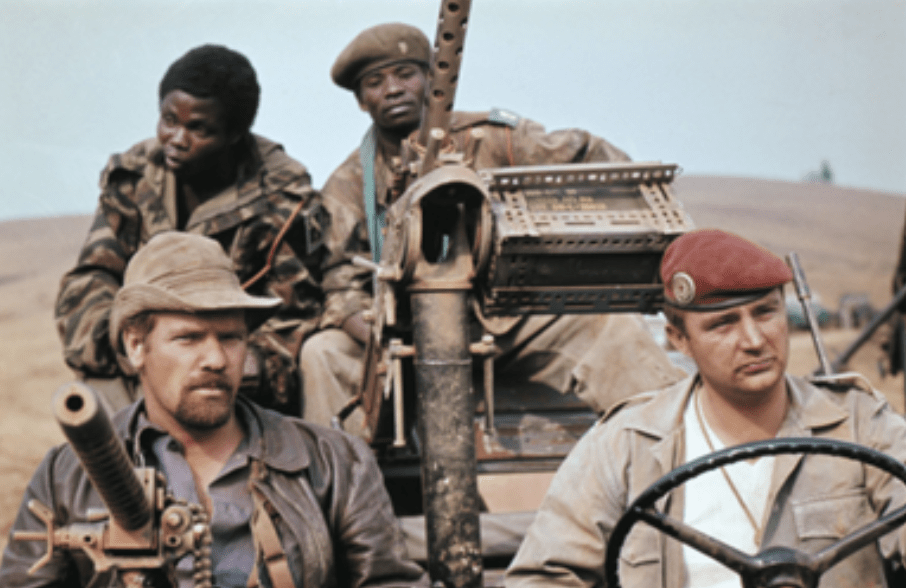
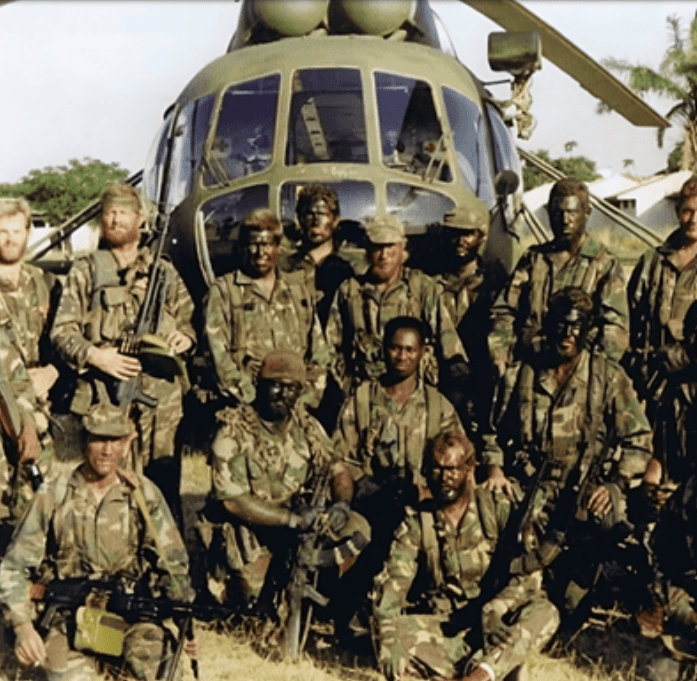
The PMC world gained public notoriety in the 1990s. With more publicized material involving mercenaries available to the public, the international community could see what PMCs were doing in Africa. A prime example of this was during the Angolan Civil War in 1992. After the civil war started, the company Executive Outcomes (EO) was hired to help train Angolian government forces. This simple training role given to EO eventually led to the company joining the conflict as private contractors. During this conflict, the mercenaries of EO proved themselves to be ruthlessly effective and it resulted in the rebel forces suing for peace. However, the Angolan government was forced by the UN and the US to terminate its contract with EO as the UN wished to deploy its peacekeeping force in place of the mercenaries. However, EO was able to seek out a new contract in Sierra Leone in 1995. At this point, the hired mercenaries were simple infantry groups with relatively simple equipment available. Most of this equipment was surplus equipment sold off by both NATO and Warsaw Pact nations. However, in Sierra Leone, EO was able to change this perception as they were able to field a nearly fully operational army into the country. Sierra Leone was in a civil war, in which the government forces fought against the Revolutionary United Front (RUF). To counter this uprising, Sierra Leone’s government initially hired EO to train the ineffective government forces. However, EO quickly stepped up and deployed a force that fielded armor and support aircraft such as one Mi-24 Hind and two Mi-8 Hip helicopters, the BMP-2 infantry fighting vehicle, and T-72 main battle tank. These were bought from sources in the worldwide arms trade within Africa and Eastern Europe. The fielding of such a force set a new precedent for rival PMCs and laid the foundations for the modern PMCs that can be seen in modern conflicts such as Afghanistan, Iraq, and most notably Ukraine.
During the wars in Afghanistan and Iraq, there were large PMCs deploying contractors to select jobs offered by governments. The most notorious company at this time was Blackwater Security Company, a PMC focusing on protecting both civilians and installations. In Iraq, Blackwater was hired to train Iraqi army soldiers and Iraqi police forces. After proving their effectiveness, the US government assigned them jobs such as protecting CIA bases in the Middle East as well as protecting key personnel such as diplomat Paul Bremer. However, Blackwater tarnished its reputation with the infamous Nisour Square massacre. While escorting a US convoy in Iraq, members of the PMC killed 17 and injured 20 civilians. This caused the once reputable company to be dropped by the US and ended many of Blackwater’s contracts. Blackwater was an example of the now fully modernized mercenary force. Effective veterans could now be hired for specific tasks without following many protocols and doctrines that slow down a conventional fighting force. Blackwater proved that such a mercenary force could be incredibly effective. However, this also proved the weakness of their methods, as they can become a liability for those hiring them due to unlawful practices.

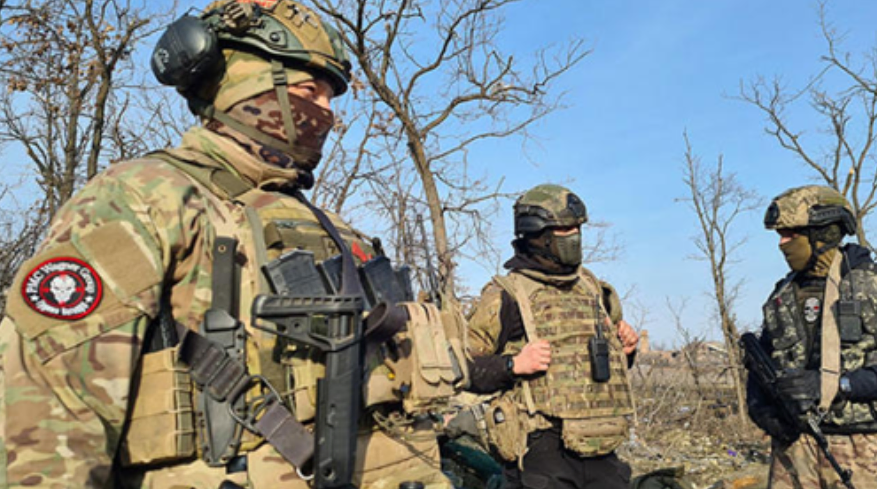
Currently, the most public depiction of a PMC is the Wagner group which was originally deployed into Crimea in 2014 and has seen a significant increase in media attention after the invasion of Ukraine in 2022. The Wagner group is a Russian state-backed PMC that has gained funding from the Russian government. The company is essentially an extension of the Russian armed forces, as the PMC goes as far as to use the Russian Ministry of Defence’s facility to train its members. The example of the Wagner group showcases the harm that PMCs can inflict. Despite its partial reliance on the Russian government, the group had a short-lived coup attempt on the Russian state after said state had ‘abandoned’ them in Ukraine. This proved that even with a group so closely related to the government, there is still the potential to backfire.
In conclusion, mercenaries, once synonymous with medieval warfare, have evolved into a complex and controversial aspect of modern conflicts. From ancient mercenaries to contemporary PMCs, these soldiers have left an indelible mark in history, shaping the outcomes of wars and influencing the trajectory of nations. As the world grapples with the implications of privatized warfare, the role of mercenaries remains a subject of debate, reflecting the enduring tension between military necessity and ethical considerations in the pursuit of security.
Image Sources:
Figure 1. https://warfarehistorynetwork.com/article/mad-mike-hoare-how-a-businessman-became-a-legendary-mercenary/
Figure 2. https://greydynamics.com/executive-outcomes-the-rise-fall-and-rebirth/
Figure 3. https://silentprofessionals.org/blackwater/
Figure 4. https://www.pravda.com.ua/eng/news/2023/04/4/7396320/
 Home | Centuria Study Association
Leave a comment