
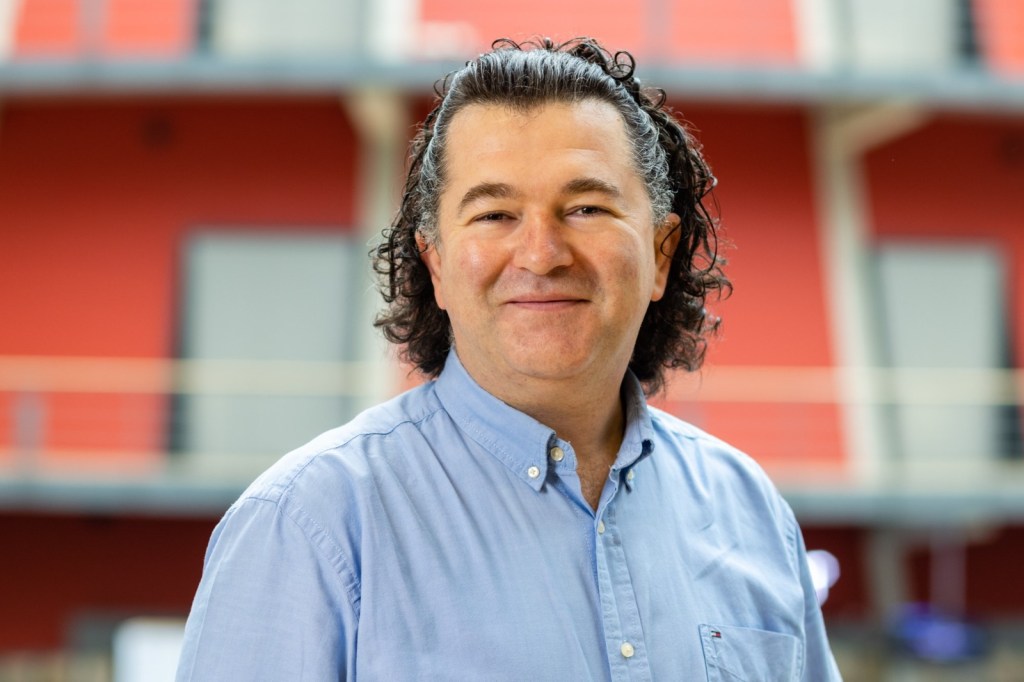
Interview with Dr. Hüseyin Akdoğan [Part 1]
By Maria Dragosin
18 December 2024
24 Minutes
Introduction
This interview is dedicated to those students who want to pursue a career in policing, law enforcement, or counter-terrorism, either in the academic sphere or in the field. I, Maria Dragosin, author of this article, came to study SSMS with the initial interest in forensic studies and criminology. My primary interests changed with time, but my love for the field of criminal justice persisted. If you can perceive similarities between yourself and my experience or wish to learn more about this field, our lecturer Dr. Hüseyin Akdoğan has decades of experience which he shared during this interview. Furthermore, this interview article provides insights into the police regime in Turkey and how Dr. Akdoğan, alongside his ranked police officer colleagues, changed it according to the American and European models to allow the state to enter the EU and improve its national security.
Dr. Akdoğan’s background
Born in 1976 in Ankara, the capital of Turkey, Dr. Akdoğan initially dreamed of joining the military. Unfortunately, due to a medical condition, he was not able to but instead found his place at the police college. “After elementary school I wanted to go to the police college (…) and join the police forces in my early years. I was 14 when I attended the national exams (…) and I was successful”. He explained that in Turkey, these types of colleges are equivalent to high schools and that students in such colleges do not have police officer duties yet. He explained, “You are just a high school student with a uniform, studying in a boarding school, (…) doing your education and training. (…) After my graduation, I went into the police academy, which is the equivalent of a university, where I started working in the policing field as a police officer.” In 1998, he became a ranked police officer and continued his work in the police forces. In 2005, he was chosen to be part of a nationwide project that sent police officers to the US, the UK, and other nations to improve the Turkish police regime. “I was selected by my government to go to the United States to pursue my post-graduate studies. I went to Texas, where I graduated with a PhD in 2009. At the end of that year, I returned to Turkey.” Upon his return, Dr. Akdoğan started his work and continuous study in different geographical locations of the country within different departments, including the police academy. After that, he decided to leave the police force. When asked about his motivation, he stated that his family was a big reason. “And so I decided to be an academic person. I started to work for the research centers and at one point found this job here in the Netherlands. So I came here with my family and I have been teaching within SSMS for over seven years. I’m married with three children. I have two daughters and one boy.”
Early years as a police officer
When asked what motivated him to enter the policing field, Dr. Akdoğan mentioned an older relative. “He enrolled into the military college after elementary school and became an example since both the military and police colleges are uniformed schools, well respected in Turkey. Once you enter such a college and you receive your uniform, the government takes care of everything for you. That way you stop being a burden to your family. I was a good student and after I found out I could not join the military college, I thought of joining the police college”. His inspiration were two friendly police officers who patrolled his neighbourhood. “In 1990, I entered the field, when I went to the police college in Ankara”. After becoming a ranked police officer, he started working in the police stations. “The first one was in the Black Sea region of Turkey in the city of Samsun, after which I was appointed in different cities. Since Turkey has a national police structure, the police organization can appoint you in any of the 81 cities in Turkey. After Samsun, I was appointed to Niğde, a city near Ankara, in the center of the country.” While being appointed in different geographical areas of the country, Dr. Akdoğan worked for different police departments. “I went in many police departments, including stations, police vocational high schools, the police academy, the counter-terrorism department, and the police department offices themselves.”
Reforming the police training regime
Dr. Akdoğan switched from the physically exhausting job of being a police officer to becoming a researcher, stating his family as the primary reason. He explained, “When you just graduate from the police academy, you have that rush of blood in your veins. You want to do a lot of things for which you are trained. You want to help people. You want to fight for your country and at the same time want to fight against the terrorists. Back then, terrorism was one of the biggest issues in Turkey. We are talking about 1990-93, the peak time of terrorism in Turkey. I was motivated to work for my citizens and my country, to help and to show them my ambitions. At a young age that is understandable and acceptable, when you don’t have a family and kids yet. But after you have married and you have a child, your priorities change. When you are working in the police force, unfortunately there is a high possibility you may end up ignoring your family.” This was especially relevant back then, when police officers would work 12/12 shifts, working 12 hours and resting for 12 hours. This exhausted the police personnel to the extent that the 12 hours of rest became a sleeping period. “With a shift like that, you do not have time for your family anymore or for social life, which impacts you psychologically and physically. (…) I conducted a study on police officers and found out that suicide rates in Turkey are the highest among police officers. This was due to the organization of the work shifts. Essentially, when you were needed you would be called in to work no matter the time of day. This was especially the case if you were a ranked police officer. If you were called during weekends or holidays, you had to go where you were called. And you can understand that when you have a family, it is not that easy. You have other responsibilities to your wife and your kids. So that’s one of the main reasons for which I wanted to shift. I wanted to do other things.”
Starting in 2000, there was a trend among ranked police officers to do their masters and PhDs, within which they started influencing each other in their career paths. “I had friends that started focusing on the academic fields of criminology, (…) or sociology alongside their policing career (…) and that motivated me further to pursue a similar path. (…) I wanted to do my Master’s because I was reading a lot. I like reading, so I said ‘Why not?’. I applied for a Master’s degree at the Institution of Security Sciences in Ankara, where I also got accepted in 2001 and graduated in 2003. I was lucky because all my professors at the police academy and at that institution had their training and education in the UK or abroad so all of them were proficient in the English language.” He added that he appreciated their open minds and their vision toward the bigger picture. “They did not focus only on problems in Turkey but also in the world. They also inspired me to pursue an academic career”. While studying at the Institute of Security Sciences, the Turkish government started a programme through which every year, they would select a few ranked police officers and police chiefs to support and send them to pursue their Master’s or PhDs in the US and Europe. The chosen police officers or chiefs were supported by paying all their tuitions and salaries and allowing them to bring their families. Those police officers could keep their rank while also being close to their families, improving themselves, and taking on academic titles and careers. Simultaneously, this project had the purpose of slowly changing the police organization for the better. “Organisational changes are not easy because you will face obstacles or resistance. But if you start with education, then the organisational change can be easy for the government. (…) They prepared a series of exams you had to pass to be accepted into the programme (…) including taking an English International exam. (…) I was chosen and I was sent to the United States to pursue my PhD at the University of North Texas. That’s the time that I shifted from policing to the academic world.”
The government prepared a list of topics that interested them in changing the police organisation in line with the EU. “This was the time when Turkey was trying to enter the European Union. (…) One of the obstacles for Turkey to become a member was the lack of high-level police organisation and problems with human rights violations so they needed to improve these areas.” The hierarchical or semi-hierarchical organisation of the police made it not so easy to quickly improve on these issues. Education became the solution. Dr. Akdoğan further explained how the government decided on a top-down approach to changing education, by first ensuring that their police officers have an international higher education degree, because they would make up 90% of the Turkish national police organisation, while the other 10% were police chiefs. As Dr. Akdoğan stated: “Without changing the behavior and education of these police officers, you cannot ensure a true change of the system.” After completing their studies, they would go back to Turkey and study the current system and propose changes to improve the policing education for the remaining police officers and chiefs. Then, they would move down the ladder to the police academies and police colleges. While this was the first step, the second step was to include all police vocational schools, in-service trainings, and so on.
Dr. Akdoğan detailed that the most relevant change was “the education time and style for the police officers. As I explained, if you just change the education and the training of the police chiefs, you cannot change the organization because they are just 10%. Yes, they have authority, they are the chiefs, so they are running the organization, and the police departments, but in the streets, people react to the police officers. At the time, police chiefs had a university degree and most of them were pursuing a Master’s or a PhD. However, the educational requirement for the police officers was just six months. So you are providing a high quality of education for the chiefs but for the officers, you are providing basic educational training. After six months, someone who entered the police vocational school could easily graduate and become a police officer, but they will be the person affecting the civilians’ perception of the police. They are the ones who will operate daily in the street, patrolling, communicating with the average people, providing services to them. So they become the image the people see of the whole system. And if you want the citizens to perceive a change in the right direction, you will need to change their behaviour at some point. Education is all about behavior change, and that a friend, who also got their PhD in the US, and I realized when we came back.”
This is the starting point of their big project all over Turkey, which included 13 cities in 7 different regions. “When we arrived back, we said that we needed to do something to change the organization and that it needs to start with the change of the educational structure of the police officers. (…) We conducted surveys with police officers, citizens, and police chiefs, whom we also interviewed, and through these data collection methods, we checked for the problems within the organisation and tried to picture the problems of education of the Turkish National Police. (…) Since back then, I enjoyed statistics and quantitative data analysis. So that part of the study became my responsibility.” Such a large research, which also included the analysis of qualitative data obtained from interviews and observations, required a big budget, and fortunately, the team received the necessary funds from the Turkish Ministry of Interior. To comprehend the sense of the scale, Dr. Akdoğan estimates the survey sample count at around 2000. The main ideas for solving the issues were to increase the duration of police officers training from six months to two years, improve the quality of the curriculum of the police vocational schools to better educate and train them, and the police academy to also offer a better education to the police chiefs. “So we prepared this package and presented it to the Prime Minister and Minister of Interior at the time. It was widely accepted. We were offered the necessary budget and we changed all the education systems in the police force.”
As expressed above, increasing the training time for the cadets from 6 months to two years was crucial because “You are recruiting them and shaping them into police officers, who will work for the police organisation. You are giving them an identity, a gun, and an authority, which are big responsibilities, which should come with big behavioural awareness, knowledge, and wise decision making”. Increasing the time spent on the training also allowed for an improvement of the curriculum. “The 6-month education and training were only focusing on all the police policies, rules, regulations, physical education and shooting practice. Once you have two years to educate and train them, you can add much more valuable information to the curriculum to shape their behaviour and understanding for the better.” The second significant change was the need to incorporate human rights education within that training. As previously mentioned, Turkey was trying to become an EU member and one of the criteria was the fulfilment of the human rights Copenhagen criteria by the law enforcement and army personnel. “So we introduced the teaching of these rights in courses throughout police vocational schools and academies. That is also when we introduced the definition of terrorism based on the European law and the European Convention on Human Rights. (…) When looking at the EU or academic reports, these two were the changes that affected the Turkish national police organisation the most. Through them, you can easily see that something is changing in the Turkish police for the better. It became respectful. When I see these reports, I’m really grateful and proud.”
When asked how they balanced the new introduction of theoretical concepts with the physical requirements for the cadets, Dr. Akdoğan explained that the programme initiated by the Turkish government ensured that the police officers were also bringing in knowledge and technological updates. “The change was big. You don’t bring back only the information but also the technology and equipment with the knowledge of operating them. All my colleagues doing their PhDs and masters (…) did not just play a student role (…). They were in contact with local police departments and some were even in contact with the national police departments like the FBI. I visited the Texas Police Academy and many other police departments in Texas. (…) So we all had (…) a chance to follow all the new innovations and developments. The equipment policy change within the policing field became a priority.” Because of the physical and psychological effects of the 12/12 shift system, a group of Dr. Akdoğan’s colleagues created a similar project to increase the rest period for police personnel. The project introduced the 8/36 shifts, which entail 8 hours of working and 24 or 36 hours of rest. Unfortunately, as of yet, the data on the improvements brought by of this new shift system to the police personnel’s quality of life isare not documented, but Dr. Akdoğan would be open to looking into the case if given the chance. In terms of equipment, crime scene investigation improved once forensics and investigation tactics and equipment were introduced. “Some of my friends working in forensics implemented and imported (…) new equipment, tactics, and technology from the US and the European countries to Turkey, and the government again invested a lot. The crime scene investigation and forensic departments became popular in Turkey after that because we could solve cold cases. We put these stories on the national media outlets. Some of them were hard to solve, but by using all those new techniques and equipment we could close them.” The stories of the solved cases were also made into a CSI-like series in Turkey. “I was one of the biggest fans of the CSI Series, CSI Miami and New York especially. And in Turkey, what we wanted to do was create a similar series. For instance, one of my colleagues working in Konya in the homicide department solved many difficult cold cases using forensic techniques, which labelled them as CSI Konya. The stories on how they solved the cases were published on national broadcasts or the news, and I think that by doing so we motivated others to join these departments (…). This new side of police was introduced into the police academy. Before, these departments seemed unappealing for police officers but after the 2000s, they became more interesting and quite popular as a career choice.”
The challenges of this project for Dr. Akdoğan and his friends included the difficulty of changing the centralized structure in Turkey. “There are some historical issues and considerations of the states in terms of localizing the government because of which they preferred to keep it centralized. Police departments belong to each state. The chief of police departments has all the authority over the city departments, but those policies are appointed from Ankara. In the Turkish police organization, we can say that there is an organisational structure, but there is also somehow a kind of discrepancy. The biggest difference between the Turkish and American police organizations was that opposed to the Turkish centralized structure, which consists of almost 300,000 school choices, in the US, they have a local structure with small police departments connected to cities, like Dallas Police Department, or Denton Police Department. They have small police departments and small sheriff’s offices, so that was the biggest difference that I observed. The other one was the education system which was also localized. There are police academies for Texas, Northern Texas, and so on. Let’s say that you want to be a police officer in Dallas. Then you need to go to another police academy, so they have different police academies and also smaller police academies. But in Turkey, we only have a huge one. When I graduated, my cohort was made of 650 police chiefs. (…) Currently, the police academy in Ankara is still standing as the only police academy in Turkey, but some police vocational schools educate and train around 5000 unranked police officers yearly from different cities. Of course, another big challenge was the resistance of some police officers. “The changes we proposed required them to change their way of acting, policing, patrolling, their ways of preparing their reports, of collecting crime scene evidence, and more. So their overall routine had to be changed, and I understand we were taking away their freedom of choice, but it was for the better. I cannot remember the name of the city now, but in one city we prepared a homicide case. We prepared all the documents and evidence pieces, put everything in folders, and took those papers and the perpetrators to court. I remember that the judge thanked us, saying, ‘There must be a change happening in the police because I’ve been working for this court for a long time and I have never seen a case prepared in such a way. You are making my work to be very easy now. I have never seen this, now I can just decide and give the sentence.’ How the court was organized before is that they were trying to collect some evidence and understand the case as they went. Now he said, ‘You are preparing an almost perfect case’. That was a good moment for all of us to get some appraisal from the court and the prosecutors. Of course, you get hit with judgement and repulsion from some, but even then, having someone saying that you are making their life easier makes for a good trade-off”.
All these improvements combined ensure that the mental and psychological burden on the police force would improve. Changing their education, improving their public image, and modifying the shift times improved job satisfaction and the overall status of the police in the Turkish society. “It impacts their well-being because before, their efforts were not appreciated, they had almost no rights, worked in bad conditions with bad equipment and an overall bad environment. So we first changed their environment, then the working conditions, policies, and (…) in Turkey right now, I can easily say that the younger generations want to be police officers, to join the police force. So we made it more appealing.”
Advice to SSMS students
The talk with Dr. Akdoğan was a long and truly insightful one. He did not stop at portraying only the importance of education for the policing world of Turkey. He also detailed its importance in counterterrorism work, especially in stopping the radicalization process. The discussion including findings from his studies on terrorism in Turkey will be published as a second part in January.
For now, here are three tips he would like to give to SSMS students:
- “Look closely at the other studies and your colleagues studying in different courses. (…) Our world is changing constantly. (…) Even if you feel like your study is too different from the other departments, if you can compare yourself to those from other courses, you can easily see what they are doing to stay afloat. (…) If you do not check for their status you can be left out of the game. We constantly try to reflect that through our curriculum. For instance, we introduced the Cybersecurity Lab and the Cybercrime Minor for the students interested in such a field.”
- “Your education and studying should not stop once you have your diploma.” As our world evolves daily, keeping ourselves up to date can give us that competitive advantage.
- “To improve your mental health, you should find another occupation alongside your work.” This advice is especially relevant for those wishing to work in the criminal justice field, be it in policing, law enforcement, or counterterrorism. Dr. Akdoğan advises from personal experience to choose a sport or physical activity to keep your body active and your mind clear.
 Home | Centuria Study Association
Leave a comment