
By Anna Vlugt
Introduction
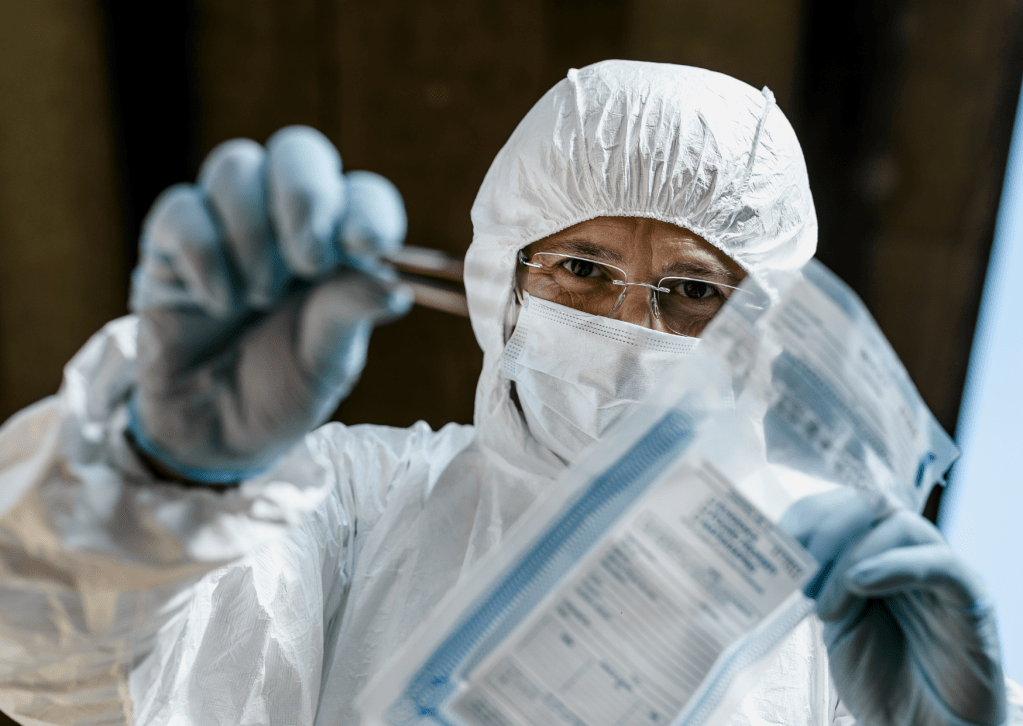
When science is used in combination with the law, it is classified as forensic science (American Academy of Forensic Sciences, n.d.). When a crime is committed, forensic scientists search the scene for physical traces such as fingerprints and then analyze and assess their findings to aid in an investigation (Shen & Vieira, 2016). The practices used in forensic sciences are constantly evolving and changing. This growth contributes to arresting, sentencing and incarcerating serious offenders, allowing justice to be served (US National Institute of Justice, 2015). However, as these developments enter the scene, ethical concerns often accompany them (Iaccarino, 2001). Currently, one extremely prevalent and debated subject in the field is the use of forensic genetic genealogy (García, 2020). This article outlines one of forensic genetic genealogy’s greatest successes, explains how genetic genealogy is used in forensics, and discusses ethical concerns.
The ‘Golden State Killer’
In 1976, a series of robberies occurred in the capital of California. In the same year, Sacramento residents Brian and Katie Maggiore were both shot and killed while walking their dog. The robberies continued but soon became rapes and murders. These crimes were primarily targeting couples. They were attacked, tied up, and the female victim was raped before both were killed. The murders continued until 1981. After a few years of inactivity, another murder was attributed to the same killer in 1986. This was the final known murder, and the case of ‘The Golden State Killer’ went cold, their identity remaining unknown until 2018. 32 years after the last murder, Joseph DeAngelo, a California police officer who served from 1973 to 1979 until he was fired due to his kleptomania, was connected to this violent series of crimes and arrested (Shapiro, 2020). Cold cases are difficult to solve, so how was it possible to identify a murderer 32 years after the act? For the first time in history, forensic genetic genealogy was used (Glynn, 2022). DeAngelo was identified after his DNA was matched with a distant relative whose data was on GEDmatch (Zhang, 2018).
The use of genetic genealogy in law enforcement
Genealogy is the study and tracing of lines of descent to find or identify one’s ancestors (Cambridge University Press, n.d.). Genetic testing services such as Ancestry.com or 23andMe are accessible to the public, enabling citizens to explore and learn about their genealogy. The ‘Golden State Killer’ case pioneered the use of forensic genetic genealogy (also called investigative genetic genealogy), which is the use of genealogical research to identify unknown actors who were involved in a crime (International Society of Genetic Genealogy, n.d.).
In many cases, DNA is left behind at a crime scene, but this alone is often not enough to identify the actual perpetrator. If DNA is found at a crime scene, it is run through a database. If there is no 100% match, partial matches may come up. This can identify relatives of the alleged perpetrator, allowing forensic genetic genealogists to build family trees that can potentially lead to the perpetrator. This genetic information is available to law enforcement officers in both the criminal database as well as consumer databases (New South Wales Police Force, n.d.). In the case of larger families that have multiple siblings, it is not possible to identify the perpetrator on genetic information alone. In such situations, other information is used to narrow the possibilities down such as age and location (Glynn, 2022).
The use of forensic genetic genealogy has become common practice since it emerged in 2018. Only three weeks after the ‘Golden State Killer’ was identified, William Earl Tabott II was identified with the same method as DeAngelo. This led the former to be arrested in 2018 for a double murder he committed in 1987 (Zhang, 2018). Hundreds of murder cases, several sexual assault cases, and four unidentified persons cases have been solved using this method (International Society of Genetic Genealogy, n.d.). Despite the impressive statistics, this practice is widely considered controversial.
Ethical concerns
Solving crimes alone is not enough to ease the public’s anxiety about the use of genetic data and allowing government entities to possess sensitive personal information. The ethics behind using genetic information have been debated since the ‘Golden State Killer’ case was solved. Some of these concerns include lack of consent, reliability, and hesitancy to incriminate family members.
1. Lack of consent
As of 2020, 19% of Americans have taken a genetic test through an online service such as Ancestry.com or 23andMe (Tiner et al., 2022). Although these statistics indicate the popularity of these tests, it is unclear how many of the participants are aware of how their data might be used. Some genetic testing services inform participants that their genetic data may be used in criminal cases; however, this information tends to be hidden within the terms and conditions, which 91% of consumers do not read (Deloitte, 2017). Furthermore, it is uncertain if those that read the terms and conditions fully comprehend the implications. Websites often use confusing or academic terminology that participants might not understand (Yerby & Vaughn, 2022). Other websites do not state that data may be used for forensic genetic genealogy purposes at all. Articles 13 and 14 of the General Data Protection Regulation (GDPR) state that companies need to be transparent with how they are using customer data (European Parliament and Council of the European Union, 2016), meaning that although it is legal to use confusing jargon, it makes the purpose of the GDPR ineffective. In addition, consumers tend to assume that when they give consent to their data in biometric research, it will be used for ‘basic’ or ‘general’ medical knowledge but not criminal investigations (Berkman, Miller, & Grady, 2018). Furthermore, websites often have an automatic opt-in setting that users regularly miss. When users do not choose to opt-out, they unknowingly consent law enforcement to use their data. Automatic opt-in settings are often criticized and considered to be a violation of the fourth amendment to the US constitution; the protection against unreasonable search and seizure (Clarke, 2023). ‘Unreasonable search and seizure’ refers to any collection of evidence without a search warrant that had been signed by a magistrate or judge (Cornell Law School, n.d.). By placing an automatic opt-in setting, it overrides the need for a warrant and results in users not needing to be presented with a warrant even though they did not consciously consent to allowing their data to be used.
2. Reliability
False positives and negatives occasionally occur when medical and genetic tests are performed. However, in forensic genetic genealogy false results are more common and more damaging. DNA can be found anywhere. If someone’s DNA is found at a crime scene, it does not automatically incriminate them. DNA only confirms that a person was at one point in time at the crime scene. It does not provide any information about when the person was there, nor does it prove their guilt (Berkman, Miller, & Grady, 2018). Furthermore, false results can also cause racial or ethnic profiling. In 2007, a hair was found at a crime scene in Germany, and they were able to identify that it belonged to a female likely from Eastern Europe. This woman’s DNA was found at multiple crime scenes around Europe, leading investigators to believe she belongs to the Romani people. For two years, Romani were targeted for DNA testing and attacked in the media. Investigators discovered later that the sample was contaminated, and the crimes were committed by a terrorist organization. Due to the faulty sample, innocent Romani women were targeted for years (Lipphardt et al., 2016).
3. Hesitancy to incriminate family members
When forensic genetic genealogy is used to identify a perpetrator, the familial matches tend to be distant rather than immediate family. When a person is asked to provide their genetic information which can potentially be used in a criminal case, they are often hesitant to incriminate family members, even if they have never met them (Berkman, 2019). Statistics show that 13% of people would not turn in a family member if they committed murder and 26% of people would not turn in a family member for dealing hard drugs. As the crimes become less ‘serious’, the percentage of people who would not be willing to turn a family member into the police becomes higher with 65% of people saying they would not alert authorities if a family member committed tax evasion (YouGov, 2018). In 2023, there were 21,501 murder offenders in the United States (Statista, 2024).
These ethical concerns are only a few. People also worry about the use of forensic genetic genealogy from a privacy standpoint, denial of specific insurance coverages, other forms of discrimination, and the potential of worsening preexisting biases in criminal justice (Berkman, 2019). Forensic genetic genealogy is considered a questionable practice to a large portion of the public and until these concerns are mitigated, there will most likely not be any widespread support of the use of genetic genealogy in law enforcement.
Conclusion
Despite the benefits that come with the use of forensic genetic genealogy, the ethical implications are widely debated and have been since it emerged in 2018. Whether it is due to familial obligations, accuracy concerns, issues regarding consent, or any other dilemmas, the practice has yet to be widely approved. However, is violating ethical beliefs worth it if a criminal can be brought to justice?
Reference list:
- American Academy of Forensic Sciences. (n.d.). What is forensic science? https://www.aafs.org/careers-forensic-science/what-forensic-science
- Berkman, B. (2019, March 21). The ethical questions about expanded DNA testing. Pacific Standard. Retrieved January 7, 2025, from https://psmag.com/social-justice/the-ethical-questions-about-expanded-dna-testing/
- Berkman, B. E., Miller, W. K., & Grady, C. (2018). Is it ethical to use genealogy data to solve crimes? Annals of Internal Medicine, 169(5), 333–334. https://doi.org/10.7326/M18-1348
- Cambridge University Press. (n.d.). Genealogy. In Cambridge English Dictionary. Retrieved January 7, 2025, from https://dictionary.cambridge.org/dictionary/english/genealogy
- Clarke, S. (2023, February 15). Is investigative genetic genealogy a menace to our privacy rights? CrimLaw Practitioner Blog. Retrieved January 7, 2025, from https://www.crimlawpractitioner.org/post/is-investigative-genetic-genealogy-a-menace-to-our-privacy-rights
- Cornell Law School. (n.d.). Unreasonable search and seizure. Cornell Law School. https://www.law.cornell.edu/wex/unreasonable_search_and_seizure
- Deloitte. (2017). 2017 Global Mobile Consumer Survey: US edition. https://www2.deloitte.com/content/dam/Deloitte/us/Documents/technology-media-telecommunications/us-tmt-2017-global-mobile-consumer-survey-executive-summary.pdf
- European Parliament and Council of the European Union. (2016). Regulation (EU) 2016/679 of the European Parliament and of the Council of 27 April 2016 on the protection of natural persons with regard to the processing of personal data and on the free movement of such data (General Data Protection Regulation). Official Journal of the European Union, L 119, 1–88. https://eur-lex.europa.eu/legal-content/EN/TXT/PDF/?uri=CELEX:32016R0679
- García, O. (2020). Forensic genealogy: Social, ethical, and legal implications. Spanish Journal of Legal Medicine.https://www.elsevier.es/es-revista-spanish-journal-legal-medicine-446-articulo-forensic-genealogy-social-ethical-legal-S244542492100025X#:~:text=Forensic%20genealogy%20may%20be%20defined,in%20cases%20with%20legal%20implications.
- Glynn, C. L. (2022). Bridging disciplines to form a new one: The emergence of forensic genetic genealogy. Genes, 13(8), 1381. https://doi.org/10.3390/genes13081381
- Iaccarino, M. (2001). Science and ethics. EMBO reports 2, 747-750. https://doi.org/10.1093/embo-reports/kve191
- International Society of Genetic Genealogy. (n.d.). Forensic genealogy. In ISOGG Wiki. Retrieved January 7, 2025, from https://isogg.org/wiki/Forensic_genealogy
- Lipphardt, V., Lipphardt, A., Buchanan, N., Surdu, M., Toom, V., Wienroth, M., Mupepele, A. C., Bradbury, C., & Lemke, T. (2016, December 8). Open letter on critical approaches to Forensic DNA Phenotyping (FDP) and ‚Bio-Geographical Ancestry‘ (BGA) [Open letter]. https://stsfreiburg.wordpress.com/english/open-letter/
- New South Wales Police Force. (n.d.). Forensic investigative genetic genealogy (FIGG). Retrieved January 7, 2025, from https://www.police.nsw.gov.au/about_us/information_of_interest_to_the_community/forensic_investigative_genetic_genealogy#.
- Shapiro, E. (2020). Inside the timeline of the crimes of the Golden State Killer. Retrieved January 7, 2025, from https://abcnews.go.com/US/inside-timeline-crimes-golden-state-killer/story?id=54744307
- Shen, M., & Vieira, D. N. (2016). Forensic science: Defending justice. Forensic Sciences Research, 1(1), 1–2. https://doi.org/10.1080/20961790.2016.1243083
- Statista. (2024, November 7). Distribution of murder offenders in the United States in 2021, by gender. Retrieved January 7, 2025, from https://www.statista.com/statistics/251886/murder-offenders-in-the-us-by-gender/
- Tiner, J. C., Mechanic, L. E., Gallicchio, L., Gillanders, E. M., & Helzlsouer, K. J. (2022). Awareness and use of genetic testing: An analysis of the Health Information National Trends Survey 2020. Genetics in Medicine, 24(12), 2526–2534. https://doi.org/10.1016/j.gim.2022.08.023
- US National Institute of Justice. (2015). The impact of forensic science research and development. U.S. Department of Justice. https://www.ojp.gov/pdffiles1/nij/248572.pdf
- Yerby, J., & Vaughn, I. (2022). Deliberately confusing language in terms of service and privacy policy agreements. Issues in Information Systems, 23(2), 138–149. https://doi.org/10.48009/2_iis_2022_112
- YouGov. (2018, October 25). Young Brits are less likely to say they’d report their nearest and dearest for crimes – even murder. https://yougov.co.uk/topics/politics/articles-reports/2018/10/25/young-brits-are-less-likely-say-theyd-report-their
- Zhang, S. (2018, May 8). The coming wave of murders solved by genealogy. The Atlantic.https://www.theatlantic.com/science/archive/2018/05/the-coming-wave-of-murders-solved-by-genealogy/560750/
Other relevant sources used in the research process:
- Centers for Disease Control and Prevention. (2024, May 15). Genetic testing. Retrieved January 8, 2025, from https://www.cdc.gov/genomics-and-health/counseling-testing/genetic-testing.html
- Forensic Technology Center of Excellence. (2022). An Introduction to Forensic Genetic Genealogy Technology for Forensic Science Service Providers. National Institute of Justice. https://forensiccoe.org/private/66291221e66ec
- International Society of Genetic Genealogy. (n.d.). Forensic genealogy. Retrieved January 8, 2025, from https://isogg.org/wiki/Forensic_genealogy
- National Center for Biotechnology Information. (2005). NIH policy on genome-wide association studies. Proceedings of the National Academy of Sciences, 102(18), 6406–6411. https://pmc.ncbi.nlm.nih.gov/articles/PMC1084045/
- Pattanaik, D. (2014, June 13). Management mythos: Should the burden of understanding be on the message giver or receiver? Retrieved January 7, 2025, from https://economictimes.indiatimes.com/management-mythos-should-the-burden-of-understanding-be-on-the-message-giver-or-receiver/articleshow/36461815.cms?from=mdr
- Wang, M., Chen, H., Luo, L., Huang, Y., Duan, S., Yuan, H., Tang, R., Liu, C., & He, G. (2024). Forensic investigative genetic genealogy: expanding pedigree tracing and genetic inquiry in the genomic era. Journal of Genetics and Genomics. https://doi.org/10.1016/j.jgg.2024.06.016
- LeTrent, S. (2013, March 31). A killer in the family. CNN. Retrieved January 7, 2025, from https://www.cnn.com/2013/03/31/living/a-killer-in-the-family/index.html
While we are transparent about all sources used in this article and double-checked all the given information, we make no claims about its completeness, accuracy or reliability. If you notice a mistake or flawed phrasing that can lead to misunderstandings, please send an email to centuria-sa@hhs.nl
 Home | Centuria Study Association
Leave a comment