
By Clara Tonecker
Introduction
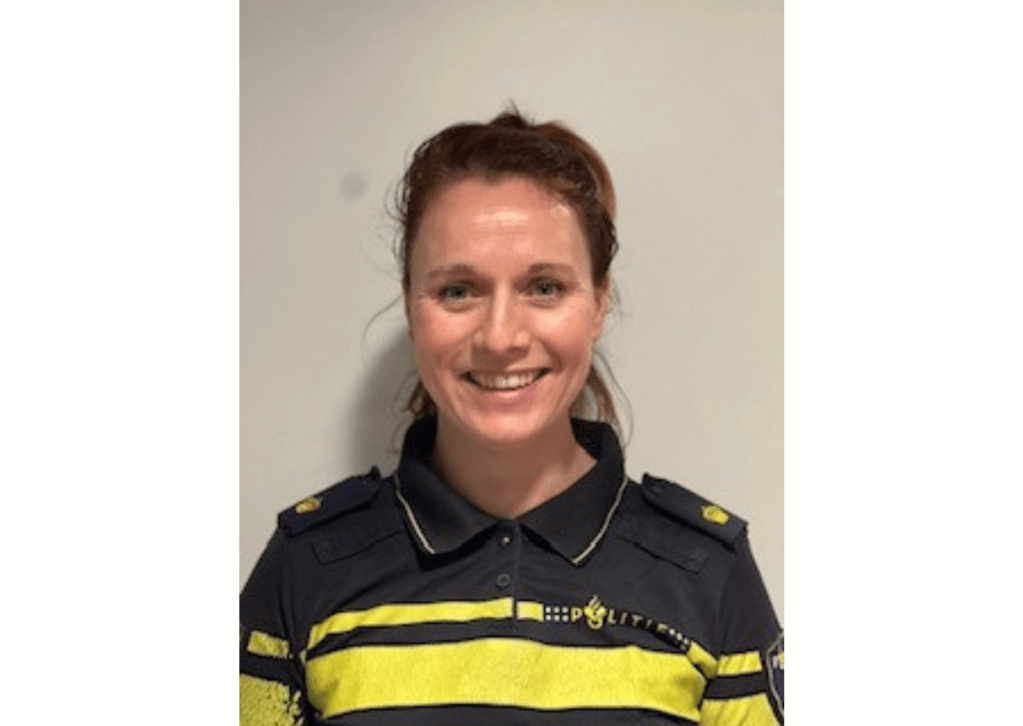
“We will make them suffer,” a police officer at the Vlaardingen station jokingly said about their internship program. The Vlaardingen police has introduced the internship program 5 years ago and invited 2-3 SSMS students per year into their midst. Karen Pluimgraaff is the person in charge of the internship program, next to being the specialist in ondermijning and the manager of the local detective department. In this article, she answered a few questions about herself and the internship program, what tasks you can expect, who the police is looking for, and how to apply. The article will further talk about former SSMS students who have successfully participated in the internship program and where this path has taken them afterwards.
Who is the officer leading the CPTED project and the internship program?
Karen Pluimgraaff has worked at the Vlaardingen police station for almost 6 years and 12 years for the Dutch police. She explains the approach of ondermijning as follows: “In the Netherlands, we have a lot of hard drugs coming in through the port of Rotterdam. The whole country is very suitable for logistics. And especially the area around Rotterdam, all the commercial areas, are very suitable for criminals […]. Criminals can be very effective, and they have contacts in the legal world. So, they need transportation, buildings and people who work for them. They need accountants. They need bank accounts. So, the people who are helping the criminals are, in principle, not the criminals themselves. They have legal jobs. But they are approached by criminals or sometimes they don’t know they are approached by criminals […]. I’m here to make the citizens aware of this.” The Vlaardingen police undertake various methods to raise the awareness of their citizens regarding this issue. “Sometimes, I go with the community officers outside and also introduce ourselves and make them aware of this subject, especially entrepreneurs […]. Sometimes, we also do prevention days where we show citizens how a meth lab smells.” In case you are curious, according to her, it smells sweet, similar to anise. Furthermore, Pluimgraaff has collaborated with SSMS for three years on the CPTED project, undertaken by second-year students. So far, her experiences have been positive as she likes the national diversity in the SSMS program and that the students take the project seriously.
What will you do during the internship?
SSMS internships usually last 6 months, so it is important to know that the Vlaardingen police only invite interns for 9 months. It lasts from September until the end of May. Originally, the internship only lasted 6 months but the interns experienced more challenges with writing their thesis because they could not access the police system anymore. Furthermore, the internship is located in Vlaardingen.
A typical work week lasts 36 hours and interns come in every day from Monday to Friday. However, interns also partake in special shifts as Pluimgraaff described: “Sometimes we have interventions during the evening, so it’s from 1 until 11 and I ask them. So, we plan, and I say, ‘In about 2 weeks, we have a big intervention’. It’s the evening shift, so we plan it. But I’m also very strict with them having to work on their thesis at least one day a week because that’s also important.” In the first weeks, interns will be asked to introduce themselves to the team. The more employees they get to know, the more assignments they can get, for instance, from community officers or other managers. Pluimgraaff added, “But the first month is always important for the introduction period. They have to see the area and we take them with us, also on emergency calls and all kinds of interventions, so they actually get to experience the fieldwork […]. That’s how to know the police. You can sit at an office, but I like them to experience the whole picture because otherwise, you cannot have an opinion about the job.”
Interns will be assigned all kinds of tasks which comes with a big responsibility. Therefore, a security clearance is required because they will get access to the police system, checking license plates, addresses and personal files. This comes with rules such as not searching friends, family members, or neighbours. Additionally, interns will join interventions, for example, “We go to the metro station and then we search people for weapons. And I ask them to watch the intervention […] as independent witnesses to see if we do it effectively and if we do it right. Before we go to it, we go through the rules. So, you have to watch for this, for this, for this. And they also have to talk to us when something goes wrong. So, we give them a responsibility and they have to keep every detail and put it down on a form.” Pluimgraaff gave other examples such as joining brainstorming sessions or organizing prevention days. However, while interns can join interventions, they are never expected to physically deal with criminals or put on handcuffs. Pluimgraaff said, “If there’s something going on, of course, we have to protect them. They are not trained. So, they also cannot wear uniform or something that says ‘police’, so they are just normally dressed. They’re not expected to fight and if there’s a dangerous situation, we put them first in a safe environment before we go on.”
When asked if interns can join the police afterwards, Pluimgraaff answered, “I work a lot to make this possible. But everyone who wants to join the police has to do an assessment. And it’s the same for everyone. And that can be a good thing, but sometimes a little bit disappointing because they have the same barrier as everyone else who never did an internship at the police.” If SSMS students are interested in becoming an operational police officer that works in the field, they have to go to the police academy first. However, there are citizen support roles that do not require police training. Moreover, the internship can be extended after 9 months until the first of September to complete one year. This extension requires both intern and the police to agree. In terms of payment, interns will receive a small monthly allowance.
During their internship, SSMS students will also have to write their bachelor thesis. Pluimgraaff ensured that the topic will be something that they are interested in. “I want them to choose something that they feel comfortable with and that they are really interested in. Otherwise, you’re not motivated enough. I always find problems in those fields, and I ask them to investigate.” Examples she gave were the police approach to drugs, youth, victims of stalking or ondermijning. She explained, “I first ask them to choose subjects and then I come with the problem. It has to be an assignment from us because we have to benefit from the research. So, it’s not totally that they decide themselves, but they can choose a subject that they like.” She also said that in the beginning, she helps the interns connect with officers and employees that could help with their research.
Do you have what the police is looking for?
One of the most important eligibility criteria is that an intern needs to be fluent in Dutch. However, Dutch citizenship is not required for interns and other non-executive personnel. International students holding citizenship of an EU country only require a Dutch BSN number. International students holding citizenship of a non-EU country must sign a tripartite contract between the student, the police and the university. Exact information regarding this contract can be found here.
Last year, Pluimgraaff chose three instead of two interns because all three convinced her to be excellent interns. When asked which characteristics of these students convinced her, she answered, “They were very assertive and entrepreneurial. They had new ideas. They were, of course, very interested. That’s what I’m looking for. Students who are really motivated and really interested in what we do.” Furthermore, it is crucial to be able to talk to people, to communicate and to collaborate. She added, “It’s not a standard office job. We expect from interns that they also want to go outside with us, do evening shifts, sometimes work during the weekend. They have to be flexible.” According to Pluimgraaff, the internship is not suited for students who prioritise other obligations such as working out or meeting friends when an opportunity to join the police in the field arises. “If you’re stuck here from 9 to 5, you don’t experience the job. Then people forget you.” Another important characteristic she mentioned was independence. “They have to be very independent because we work different shifts. I cannot be there from Monday to Friday. I want them to work independently so that they also get to know the organization quickly.” The internship is not suited for students who only want to go to the office and work on the computer, not talking to the other officers and employees. Confidence is another trait that Pluimgraaff is looking for in interns. “If we search people, you cannot be scared. You have to dare to say to the police officer, ‘Did you check the right car?’. I expect from interns that they can do that.” She is looking for a mix of confidence, enthusiasm and flexibility in the next interns.
How can you apply?
The application process goes fully through the university. If you are interested in the internship program of the Dutch police, you have to approach the SSMS internship advisors Mike Hoogewoning and Leonie Duijnisveld. During a personal meeting, you can discuss your aspirations after SSMS and why you believe the police internship program suits you. Regarding this, Pluimgraaff said, “I try to explain to Mike and to Leonie what kind of interns I’m looking for. And I hope that they also select so that when they send somebody to me, they have already done a pre-selection.” Around April or May, the internship advisors forward a list of names to Pluimgraaff. By then, the students will also contact her via email. They are asked to write a motivational letter and a resume. When asked what she likes to see on that resume, she gave the example, “Sometimes, they do something for a sports club. Like they organize events or they’re trainers or they help with something else […]. That’s the aspect that I’m looking for. Because it shows it’s in your personality that you like to go out or to organize things.” Additionally, previous work experience is crucial. According to Pluimgraaff, this internship should not be your first time entering the working world.
All selected applicants are invited to an interview with Pluimgraaff at the Vlaardingen police station. During the interview, she tries to search for their motivation and assess if they have the necessary characteristics and soft skills. She does this by asking directly if they are assertive and willing to do certain police tasks. She added, “I bring somebody with me most of the time, an intern who was successful. They can relate because they did the same study.”
What could your future path look like after this internship program?
One of the three successful interns from last year now works for the municipality of Maassluis, responsible for the approach of ondermijning. Pluimgraaff added, “I think she gets better paid than I do. So, it’s a big step.” The second intern from last year is now a policymaker at the courthouse in The Hague. The third intern had high aspirations to work for the police, so they created a special position for her at the Vlaardingen police station. Pluimgraaff said, “Me and my team manager, we created a possibility to keep her here at this police station because she’s a very good employee […]. She does a lot of things, so we depend on her now. We really need her.”
When asked which SSMS thesis had the most significant impact on the police, she found it difficult to choose because there were multiple that contributed positively to the police work. Lastly, she chose a thesis that tackled the police’s approach to cannabis. She said, “I used her figures and her data […]. You could see in the data there was a change, and we already experienced it.” The student’s research uncovered that there were fewer cannabis plantations in residents’ homes and more cannabis being imported from other countries. This meant another police approach was needed. Pluimgraaff elaborated, “We knew something had changed but it was nice to actually have it on paper. Have concrete data to say ‘Look, we really have to do more logistic interventions’ because it is more in the import and less in the homes.” Logistic intervention means searching trucks and commercial buildings where imported cannabis could be stored. When asked about the largest cannabis load that the Vlaardingen police ever found, she reluctantly answered, “It was in front of a, well, I’m not sure what I can say about it. But let’s say it was from a truck. This was imported. And it was all boxes containing 250 kilos of cannabis.”
Conclusion
The internship at the Vlaardingen police offers students a unique insight into all kinds of police work, ranging from the office to the field. Interns are encouraged to accompany police officers for all kinds of tasks, which means enthusiasm and flexibility is required. This article is meant to give SSMS students an idea of what they can expect and if it would be suited for them. If you have further questions, do not hesitate to get in touch with Mike Hoogewoning or Leonie Duijnisveld.
 Home | Centuria Study Association
Leave a comment