
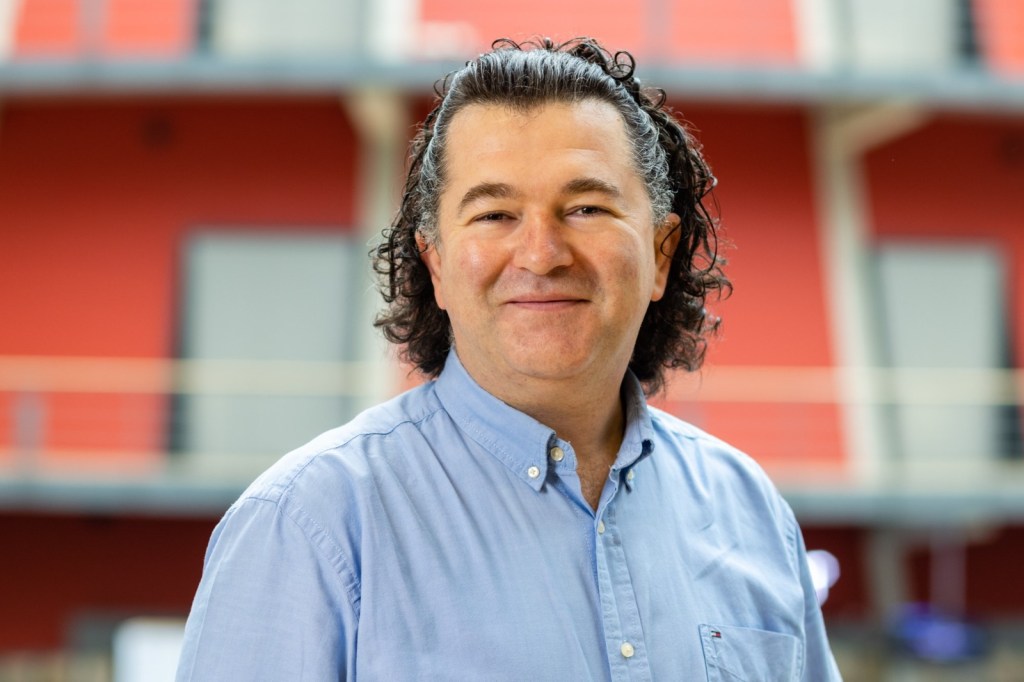
Interview with Dr. Hüseyin Akdoğan [Part 2]
By Maria Dragosin
Introduction
This interview is the second part of my December interview with Dr. Akdoğan. In the first, we looked at the police regime in Turkey and how Dr. Akdoğan, alongside his ranked police officer colleagues, worked to change this regime after the American and European models. This interview article looks at his work within the Counterterrorism Unit during a tumultuous time and how changes in the educational world of policing can help the fight against radicalization, especially among young citizens. This article also covers parts of his academic findings about terrorism in Turkey.
Studying terrorism for his PhD in the United States
When asked about the switch from policing to counterterrorism, Dr. Akdoğan detailed his choice as follows: “When I first started policing in 1998, I was working in different departments, including police stations and other departments. Up until I went to the United States in 2005, I didn’t work for the Counterterrorism Department. During my years in the Police Academy, I was planning to attend the special Intervention Unit, or SWATS. Terrorism was one of the biggest issues in Turkey back then and there was a kind of strange opinion in the police academy. If you can go and be part of the police intervention unit, the SWAT team, then you are a good guy, a strong guy, you know, I really wanted to do that. But after I graduated from the academy, I couldn’t pursue that path because of family issues and because there was a difficult selection process procedure. After that, I started in police stations, so working for the Counterterrorism Department was not on my agenda until 2005, when I went to the United States for my PhD. There, I studied police and human rights; the topic I chose from the pre-selected topics list offered to us by our government.” This list included topics which the Turkish government considered important for the ranked police officers to study for improving the Turkish police regime and national security. Dr. Akdoğan then detailed his choice for his PhD: “Why did I choose that topic? During my master’s, I studied human rights, and the master also included some topics about counterterrorism operations. For instance, how can the police design counterterrorism operations effectively while taking into consideration and respecting human rights. That was the first time I dealt with terrorism, but back then, it was not an interesting subject for me to study. After I went to the United States, I realised the magnitude of terrorism. I was proven that this was a topic that the other nations are also really interested in. This was the case, especially in the US, where police departments and academia were interested in our approach and understanding of terrorism. As you know, in the United States, terrorism was not on the agenda until the 9/11 attack in 2001. But Turkey has been fighting against it for over 40 years, meaning we had much more experience than them, and so they were really trying to understand what and how we are doing in terms of counterterrorism. There, I could easily share my ideas and experiences on the topic with other countries. That was when I started to read about terrorism and counterterrorism. My presentations during my PhD times were on this subject, and that is when I first started conducting research and writing papers about terrorism and counterterrorism. It finally caught my attention and interest, and as soon as I returned to Turkey after finishing my PhD, I was appointed to a city in the Eastern part of Turkey, which was notorious for terrorist attacks. In that city, you can find any kind of terrorist organisation, from leftists and Marxist-Leninist separatists to even religious organisations.”
Working in the Counterterrorism Department
Dr. Akdoğan explains his motivation of continuing his career in the Counterterrorism Department, the importance of a holistic approach to counter radicalisation, and the projects and findings of his academic research on Turkish terrorism. “I was appointed to that city because of my academic background, and because I wanted to work in the field. I started working in the Counterterrorism Department. While I was there, based on my academic studies, I realised that terrorism can not be solved with only security measures. There must be a holistic approach to terrorism, which includes many stakeholders from the Ministries of Education and Religion, universities, schools, and teachers to everyone, such as normal citizens. They all must be involved in the fight to stop radicalisation and ultimately terrorism. You cannot be successful if you just deploy armies or police officers to fight against terrorists. So, I started some social projects for people and students living in that city to prevent their radicalisation. Of course, there are many reasons why a person would choose to become a terrorist, be it personal or be it that their families or friends are part of such an organisation and they don’t have any other choices. Because of these reasons, it is very important to include the community in the studies.”
Next, Dr. Akdoğan detailed his experience of conducting social studies while continuing his field work: “While I was working in Tunceli, I had little time to focus on research, mostly because terrorism was one of the largest issues there. For context, there were two very active terrorist organisations at the time. If you are working as the chief of a counterterrorism department, you may not have enough time to conduct research. Even in these conditions, I was able to observe and collect a lot of data, which helped me understand the field and compare the field results with the already existing academia and literature. For instance, I had twice the chance to attend conferences about terrorism while I was working. One was a meeting organized by the Organisation for Security and Co-operation in Europe (OSCE) in Vienna for preventing female radicals, where I presented the process of radicalization in women and the effects on women entering the PKK in Turkey. For the other conference I had the chance to go to the US and present my research on terrorism, thanks to funding from the Turkish Research Council, who accepted my paper and provided me with the necessary funds to go and present my findings.” As mentioned, these were the two times when he was actively involved in research, but mostly Dr. Akdogan did field research, which is difficult to do while in the field because you can barely find the time to investigate.
Key experiences
While fighting terrorism in Turkey, Dr. Akdogan understood more about the terror fighters, their motivations, and what causes individuals to choose such a dangerous way of life. When asked about his key experiences, he said: “The first key experience I had was that when you just read the literature about terrorism and counterterrorism, the picture is not that crystal clear. To understand the issue at its roots, you need to see the field. For instance, yes, we are talking about why people are radicalised and why people are joining terrorist organisations, but in terms of counterterrorism, what are the problems law enforcement personnel are facing? While working in the Counterterrorism Department, I had many police officers working for me. I saw that they do not have the necessary depths to understand the root issues. They are not well educated and trained in terms of counterterrorism. Yes, they have had some kind of experience in policing fields, but not that much experience. So, I realised that we need to provide them with some kind of in-service training for terrorism. The second key finding I had is that while you are working in the Counterterrorism Department, you can face a lot of stress, which causes a lot of problems, from medical to psychological problems. There must be some kind of process or policy to overcome these psychological and physical issues for police officers working in a counterterrorism department.”
“A third key experience is that you need to have a holistic approach to tackling terrorism. Some studies are looking at the efficiency and effectiveness of police while in the field, but you can not be successful in this task if you focus only on security measures. If you want to succeed you must do other things. For instance, many of my findings and conclusions came while talking with the students in that region. There was a university in that city where I was stationed, where I had enough chances to talk to the professors or their students about this subject, how it was affecting them, why some joined terrorist organisations. I also discussed this with teachers and students from other educational levels, such as those from primary schools, elementary schools, and high schools, which are possible recruitment sources for terrorist organisations. Through my talks with them, I realised that they’re not getting enough education and training in terms of how to refuse terror organisations when they are asked to join them. They also lacked training in how to protect themselves, but that’s maybe because of limited sources in that specific city. We encountered that issue with one of our projects in that area, but luckily the government provided the necessary funding for us. That project was aimed to make a first contact with primary, elementary, and high school students in a peaceful manner so that to represent police and the law enforcement in a good light and make them feel safe around our personnel. Otherwise, without that contact and good first impressions, they will encounter the police during demonstrations or riots, which creates tension. So first, they need to understand that law enforcement personnel are also human beings. They also have feelings, and in turn, the police officers should understand that not all the people living in that area or city are terrorists. To do that, we started the project, during which we wanted all our students to come together in the city centre to have a fun time with the police by talking with the officers and trying to understand each other. Fortunately, it was a successful project. Even so, there was a moment that marked me, which I can not forget after all these years and which I always bring up during the TCT Minor. One day after we had lunch with the students, one of the students, let’s say around 10-11 or maybe 12 years old, started to put a handkerchief in a water bottle. After a while of putting all the handkerchiefs in the bottle, he just left some parts of the handkerchief out of the bottle, and he went to a teacher and said: “Look what I did!” What he was showing was a Molotov cocktail, and he was just showing that proudly to his teacher. That event shocked me because the teacher knows this stuff, and they are talking about this during their classes. Otherwise, how can a student show how to make something like that so openly? So, I realise that we have a problem here that had deeper roots. Even though we are doing those projects, and we are trying to actively counter terrorism, if we don’t have those teachers backing us, then whatever we are doing is nonsense to them. Because we are meeting with them maybe once in a year or in some areas once in five years, but the students, the children they are there with their teachers during all their education. The teachers are with them five years during the primary school, three years during the elementary school and three years during the high school, an amount of time to which we cannot ever get close to no matter how many resources go into these social projects. So, that was one of the key moments in my career when I realised and decided that Turkey must have a holistic approach to solve the problem of terrorism. Otherwise, it’s a really hard task if not impossible. In that case, since there were a lot of citizens and the teacher present, we didn’t do anything. But after the event, we informed the principal of that school about the teacher.” This experience can shape the way you look at terrorism for the future, and for Dr. Akdoğan, this was the case, especially for his academic research.
Academic findings from his research about the PKK
Here are a few of the most important findings Dr. Akdoğan has uncovered during his research. “One of the biggest projects that I was involved in was as I mentioned the one regarding the education of police organisations. The second one was about the research on PKK. More specifically, it was research where I analysed the attacks of the PKK, a separatist group, and its organisation between 1984 and 2012. I had access to the legal data, which took me around 2 years to analyse since I wanted to conduct an in-depth spatial and time series analysis of the PKK attacks which took place in Turkey in this 28-year period. So, I had a huge database of PKK attacks, including the time and the exact geographical location of these attacks. Thanks to this analysis, I showed all the data in a map and also analysed the attacks based on their time (yearly, monthly, weekly, and even daily identifiers of these attacks). But I enjoyed working on this study since I really like quantitative studies. I prepared the data, which took me almost two years. Then, after that, I prepared for the first presentation of the findings in a map. I worked with one of my colleagues to present the findings of that data in an international conference in Antalya. What we did was to picture the strategy of this organization very well and how the PKK changed their organisation, motivations, and beliefs during that period. For context, it was initially established as a Marxist-Leninist organization, but as time went on, they adapted their actions or changed their ways of introducing themselves to the Kurdish population to attract them into their ranks. Based on this fact, we started identifying this organisation as a pragmatic, utilitarian terrorist organisation instead of a Marxist-Leninist one. Now they think that the religion is a very good topic to gain the support of the average citizen, but if that were to change let’s say next year, then they will also switch to that new topic.”
“Another finding we had from looking at the attacks between 1984 and 2012 is that you can easily see how politics influenced the attacks. When there was a big election, the organisation would start attacking to affect the votes of the citizens. Or when there was a big leap from Turkey in something, then the PKK would start playing a role. After the capture of Abdullah Öcalan, ex-PKK leader in 1999, their activity became less frequent. While we were doing this project, we also found that the organisation changed its structure frequently so as not to fit under the international definition of terrorism. Additionally, after the capture of Öcalan, they started to be a part of Turkish politics. So, the Kurdish Party is now a big part of Turkish politics and mostly supports Kurdish rights. I can say that they are playing a huge role in the democratic elections of Turkey because Kurdish people represent between 10-15% of the votes. We can definitely see improvements since the political party of the Kurdish people can affect Kurdish peoples’ voting during the elections, which is a good thing because people should not be made to fight for their rights with guns. Do you want people to be active in the political arena? Yes, but there is still the danger that they’re going both ways, if they have a political party, and if they have an armed violent terrorist organisation that is dangerous because these two groups are fighting also amongst each other. Unfortunately, there are some people who want to be violent and change the structure of the country with violence. Even so, there are also people who are saying that there is no need for violence. Let us sit and talk through these issues. As a country still struggling with terrorism and fighting against it, I think that the Turkish government must support the political party to stop people from joining the terror side.”
The geographical area in which PKK operates also affected the mortality rate of their members. “In the very first years, based on that study, PKK targeted mostly the Kurdish population, in small villages. In the foundation phase, they wanted to use the rule of force against the Kurdish people. They wanted Kurdish people to choose their side out of fear and not to choose the government. This was an attitude of saying, ‘we are an organisation fighting for you, so you need to back us. You don’t need to be supporting or working for the government, but instead support or work for us.’ At first, this is what they did. They just used force on the Kurdish population. Some of their tactics between 1984 and 1993-1994 were to mostly attack with rifles and bombs and use guerrilla tactics against the army and against the police.”
“Another study I worked on was on the lifespan of terrorism. For this study, we looked at those who wanted to join the terrorist organization in the mountains. The results depend since we looked in different cities in Turkey, but the maximum lifespan is 4 years, and the minimum is not even one year, but a couple of months.”
The captivating world of conducting research
Dr. Akdoğan researched other fields besides those of policing, terrorism, and counterterrorism. For instance, he worked on a study researching the needs of Syrian refugees in Turkey and how the Turkish police and government manage these needs and provide appropriate care. When asked about his motivation for conducting such thorough and big studies, he said: “I like field research since you can apply the academic knowledge in the field. You can collect a lot of data, and it’s like solving a puzzle. You’re just trying to collect and analyse the data to solve a problem. And in time you can see that your research, analysis, and findings are used to change something for others or to do something good for the people. It really gives you a nice feeling. And it motivates you that yes, I need to do that to keep working on these issues to help others. Like investigating a police case, but on a bigger scale.”
Unfortunately, there are some disadvantages to conducting research, which should be mentioned. “I studied many different topics of policing, like police management, homicides, theft, and those kinds of things. But after I started working for the terrorism and counterterrorism field, I mostly focused on that one, and thus, I overlooked my previous research. It would be nice to go back and study, for instance, if the highest suicide rates are still among police officers.”
When asked about his future research, Dr. Akdogan detailed his experimental study about group dynamics and decision-making with some of his friends and colleagues who now work at MIT and SSMS, and a chapter he is writing for a Gendarmerie Book in collaboration with a colleague from IVK, now also working within SSMS. Additionally, starting this year, he will be chair of our curriculum committee, helping to improve the curriculum of our courses: “If you ask me how to define SSMS and the SSMS curriculum, I can say that SSMS is a learning organisation, learning and observing every year and then based on the results it is changing and developing its curriculum. You can not find the same curriculum every year. There may be the same courses, the same educators, but you can be sure that the content at least is improving constantly. This is a key action for us since yearly, we have met with our network, and we discuss with each stakeholder’s representatives about what is happening in the professional world. What are their needs, and what students must understand before entering this professional world. Based on their feedback, we modify and improve our curriculum because once you graduate, you go work for them, and you need to be ready to fulfil their needs.”
Conclusions
Education is important for a functioning society. Dr. Akdoğan portrayed several examples from how young children were taught by a teacher about the methods of creating a Molotov cocktail to how you cannot change the general population’s perspective of the law enforcement and police personnel without properly instructing these personnel on protecting the civilians. Changes in attitude are difficult to realise without proper funding, resources, motivation, and field research. Turkey was able to improve its overall criminal justice system and national security by learning from other nations. These strategies, when implemented, impacted many levels of society, but the changes could not have been made without the right motivation of other ranked police officers, such as Dr. Akdoğan, who wanted to improve the lives of their citizens and the overall condition of their country. This is also the case for counterterrorism in Turkey. As you read, efforts and studies were made to fight holistically against terror instigators in the early 2000. These efforts improved the conditions of some, but it is difficult to make a big change in someone’s life when you are only a small part in it. These are only a few conclusions that can be drawn from the talk with Dr. Akdoğan.
 Home | Centuria Study Association
Leave a comment