

Introduction
SSMS is not only about countering terrorism, analysing violent conflicts, and solving cold cases. While the threats to humankind deriving from terrorism, war, and crime are evident, they often take overproportionate space in our minds about what safety and security means. The obvious and almost boring answer is that one of the biggest threats to humans is climate change. However, this article is not meant to point an accusatory finger at everyone who ever sat in an airplane. Most of us know by now the consequences of our individual actions and pointing them out again will not change our minds about giving up the comforts of travelling or buying plastic-packaged to-go food. In relation to safety and security, natural disasters are at the news forefront of the impact of climate change. This article is written for those interested in connecting natural disaster management with protecting and conserving nature. Since everything relating to climate change is often accompanied by negative news, this article focuses on positive case studies from around the world in which nature is used to protect itself and humans.
In the international community, the calls for addressing climate change mitigation and ecosystem restoration in disaster risk reduction efforts are increasing, as it is incorporated, for instance, into the 2030 Agenda for Sustainable Development and the Sendai Framework for Disaster Risk Reduction. Here, the term most often referred to is ‘nature-based solutions’. Nature-based solutions refer to “actions to protect, sustainably manage, and restore natural or modified ecosystems, that address societal challenges effectively and adaptively, simultaneously providing human well-being and biodiversity benefits” (UN Office for Disaster Risk Reduction [UNDDR], 2021). In this article, it is explained how nature-based solutions are used in natural disaster management, how they differ from artificial solutions, and which practical applications are currently being implemented with examples from urban and coastal regions, mountains, and wetlands.
What are nature-based solutions?
According to the World Economic Forum’s Global Risk Report, the three most pressing risks are extreme weather, biodiversity loss, and climate action failure (UNDDR, 2021). Nature-based solutions can kill two birds with one stone by reducing the risk or impact of natural disasters such as floods, wildfires, and draughts, and simultaneously storing carbon and restoring natural habitats. Essentially, it means to use nature to protect itself but also humans from natural disasters. Firstly, a few terms need to be explained:
- ‘Green infrastructure’ is a term that refers to natural or semi-natural areas such as forests or parks that deliver many ecosystem services (e.g. water purification, air quality, space for recreation).
- ‘Blue infrastructure’ refers to water-based elements such as lakes, rivers and coastal areas.
- ‘Hybrid infrastructure’, in this context, refers to part-engineered, part-blue/green spaces such as green roofs or artificial channels.
- ‘Grey infrastructure’ means artificial, fully engineered infrastructure such as houses (UNDDR, 2021).
Nature-based solutions vs ‘grey infrastructure’ – Mangrove restoration vs dyke construction
If a nature-based solution is better than an artificial solution, also called ‘grey infrastructure’, depends on the specific context. As an example, mangrove restoration will be compared to dyke construction in a tropical coastal region. The mangroves act as a natural buffer by reducing waves and storm surges, mitigating flooding and erosion. The costs for the dyke include acquiring and transporting the materials, planning, constructing, and paying the workers. Nature and habitats might need to be removed to make space or could be disturbed for the dyke construction. On the other hand, the costs of mangrove restoration include potentially buying more land on which to plant the mangroves and paying the workers. While both require money for maintenance, nature-based solutions are often cheaper to maintain in the long-term. The main disadvantage of using mangrove restoration as a mitigation measure for storm surges is that the mangroves can only provide effective protection after a few years of growing, while a dyke can provide protection immediately after completion. In the long-term and looking at the mangrove restoration project from a broader perspective, the cost-benefit comparison shifts. A mangrove ecosystem can improve the living conditions of coastal inhabitants by providing wood and habitat for crustaceans and fish. Furthermore, it contributes to mitigating climate change by naturally storing carbon. In general, nature-based solutions improve human health and well-being (UNDDR, 2021). Despite the holistic benefits, it would be incorrect to generalize that nature-based solutions are always better than ‘grey infrastructure’. Which solution will serve better in a given context is up to the local community to decide.
A 20km green corridor through the city – Medellín, Columbia
More than half of the global population lives in cities, a trend that significantly contributes to the climate crisis and biodiversity loss. However, if planned well, urban development, nature conservation, and improved livelihoods can work hand in hand. The Green Corridors Project in Medellín, Columbia, serves as an example, which, as the second-largest city in Columbia, had problems with air pollution and overheating. Between 2016 and 2019, 18 roads and 12 waterways were transformed into a 20km-network of continued green space (INAS, n.d.). In total, 36 green corridors were created, 8,800 trees and 90,000 species of other plants planted, and 65 hectares preserved. These green corridors can help mitigate floods, heat waves and heavy rain (World Wide Fund For Nature [WWF], 2021). Medellín’s average temperature was reduced by 3.5°C, the surface temperature by 10.3°C. Furthermore, energy used for cooling was saved. The air quality was improved and the morbidity rate from acute respiratory infections was reduced from 159.8 to 95.3 per 1,000 people (INAS, n.d.). For the project, 75 locals from disadvantaged backgrounds were hired as gardeners, improving their livelihoods through job security. Economically, the project required a $16.3 million investment but will create benefits of up to $136 million between 2020 and 2030 (WWF, 2021). Medellín is a great example of how cities can positively influence climate change and contribute to the protection of nature and humans from climate hazards.
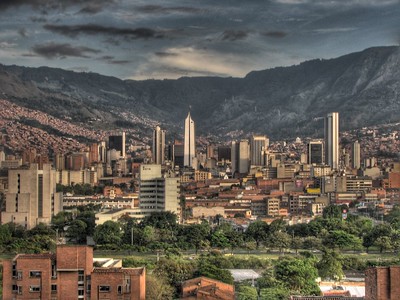
“medellin” by DavidPLP is licensed under CC BY-SA 2.0. https://openverse.org/image/97ec0b52-192d-48ba-a549-252d738ca92b?q=medellin&p=16
How protecting turtles can protect humans – Nosy Hara National Park, Madagascar
A video of a plastic straw being removed from a turtle’s nostril went viral 10 years ago and sparked an anti-plastic-straw/save-the-turtles revolution. Since then, turtles have become the mascot of the fight against plastic pollution and climate change (Rosch, 2024). In the Nosy Hara National Park in Madagascar, the Ambodivahibe Marine Protected Area (MPA) was created to protect turtles, fish, corals, and marine birds, while simultaneously reducing the risk and impact of cyclones, marine submersion (rising sea level), and erosion (WWF, 2021). It covers a territory of 13,400ha on the northeast coast of Madagascar. The project was also implemented to tackle the region’s human threats such as overfishing, reef degradation, anchoring and trampling, illegal hunting (also called ‘poaching’), and illegal logging of mangrove trees. Here, MPA management is used as a nature-based solution to reduce disaster risk by restoring seagrass beds, mangroves, and coral reefs which act as a natural buffer between human settlements and floods. Co-benefits of properly planned MPAs are that seagrass and mangroves can store carbon, aiding the reduction of GHG emissions; the depletion of fish resources for the local community is avoided, contributing to food security and resilience; and green jobs are created, improving job security and social cohesion among local communities (WWF, 2016).
From protected forests to protective forests – Tyrol, Alps
One billion people live in mountainous regions, which cover roughly one third of the global land surface (UNDDR, 2021; Mehta et al., 2023). Healthy mountain ecosystems are not only vital for mountain settlements but also for the many communities living downstream, who are equally endangered by landslides, avalanches, flooding, rockfall, and debris flow (UNDDR, 2021). Natural protection against these hazards can be provided by forests, also called ‘protective forests’ in the context of nature-based solutions. Protective forests function similarly to avalanche barriers, for example, they can prevent the release of a mass of snow or mud and impede its downslope propagation. Furthermore, they can reduce the intensity of a natural hazard, causing less damage. Forests also provide many ecosystem services (e.g. natural habitat, timber products, non-wood products, recreational opportunities) that can help a community recover faster from a damaging event. However, their protective effect fluctuates with land-use change, forest management interventions, climate impacts, and natural forest dynamics (Moos et al., 2023). For example, 40,000ha of Tyrolean forests are particularly endangered as they are located below 1000m above sea level and therefore under more pressure from droughts and bark beetle. The Climate-Smart Mountain Forest Action Group (“Klimafitter Bergwald Tirol”) in the heart of the Alps is working on adapting Tyrolean forests to climate change by strengthening forest maintenance, actively reforesting with mixed tree species, and following the principle of sustainable forest management (Klimafitter Bergwald Tirol, 2024).
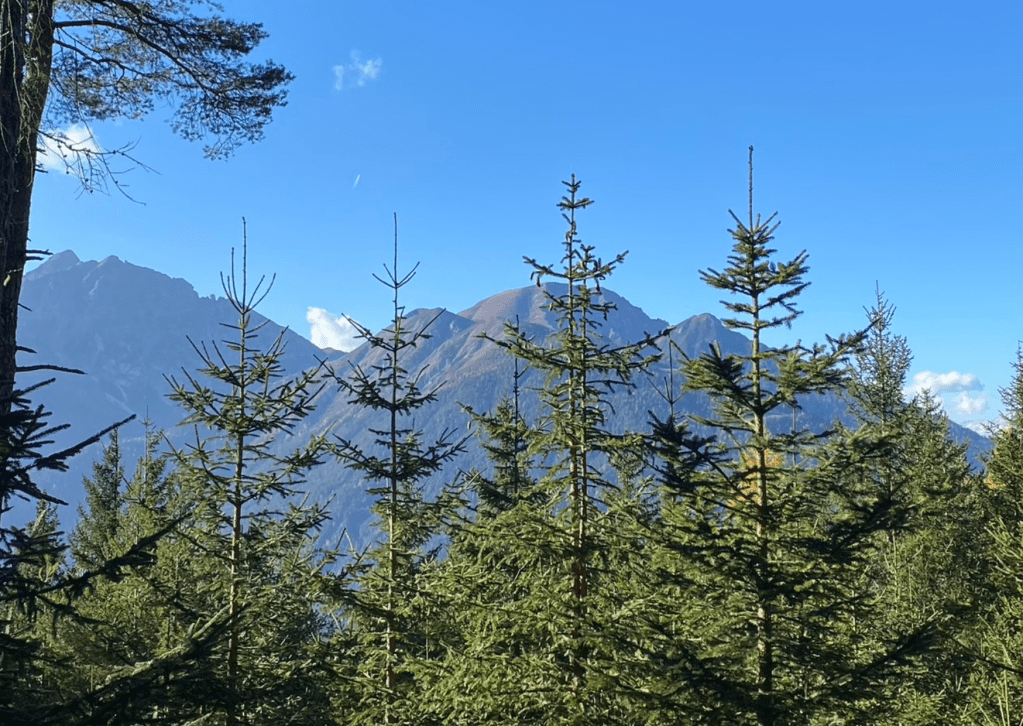
“Tiroler Wald” by Lisa Braune.
How peatlands work in natural flood management – Scotland, UK
Peatlands characterize the wild landscapes of Scotland. Across Scotland, peatlands are being restored as part of the national programme Peatland ACTION, funded by the Scottish Government, which has made it its goal to invest £250 million in the restoration of 250,000ha of peatlands by 2030. This project is being undertaken by a partnership of NatureScot (Scotland’s nature agency), the Cairngorms National Park Authority, the Loch Lomond National Park Authority, Forestry and Land Scotland, and Scottish Water. 51,000ha of damaged peatland are currently being restored (International Union for Conservation of Nature UK Committee [IUCN], n.d.). Peatland restoration is part of natural flood management, a nature-based solution to reduce the risk of floods. One tenth of the UK’s land cover is peatland but it has been damaged by air pollution, drainage, fire, erosion and other land-use activities. Once restored back to their natural state, peatlands can store flood waters and reduce the pace by which stormwater moves into river channels, reducing and delaying flood peaks (Allott et al., 2019). Revegetation of peatland with sphagnum mosses will result in slowing waterflows, making floods flow up to 10 times slower than over bare peat (Holden et al., 2008). On top of their benefits regarding flood management, peatlands are carbon sinks, major contributors to Scotland’s net zero by 2050 ambitions. Furthermore, if fully restored by 2027, they will provide £191 million of annual economic benefits; however, this number will decrease the further restoration is delayed (Glenk et al., 2021). Restored peatlands also reduce the risk of wildfires because heather plants do not grow well in water-logged areas, reducing the fuel load (Baird et al., 2019). Lastly, by restoring peatlands, new ponds are created, becoming habitats for aquatic species, therefore increasing biodiversity as well.

“A peat bog below the top of Doune Hill, Luss Hills, Scotland” by Michal Klajban is licensed under CC BY-SA 4.0. https://openverse.org/image/cdbd559a-2af8-4f13-970f-e545a763542d?q=scotland+bog&p=3
Conclusion
There are many more ways in which nature-based solutions are implemented around the world. This article addressed nature not as the victim of humanity but as its potential protector. Natural disasters will only increase in intensity and frequency, meaning more research and action will be needed to understand how nature-based solutions can be utilised in different contexts to protect not only humans but also nature itself. If you are interested in the topic, I recommend the following reports:
- UN Office for Disaster Risk Reduction [UNDRR]. (2021). NATURE-BASED SOLUTIONS FOR DISASTER RISK REDUCTION. United Nations. https://www.undrr.org/words-action-nature-based-solutions-disaster-risk-reduction
- World Wide Fund For Nature [WWF]. (2016). CHANGING TIDES – Climate Adaptation Methodology for Protected Areas (CAMPA) – Coastal and Marine. https://wwf.panda.org/discover/our_focus/biodiversity/protected_areas/naturalsolutions/campa/ [Report download]
- WWF. (2021). URBAN NATURE BASED SOLUTIONS – CITIES LEADING THE WAY. https://wwf.panda.org/projects/one_planet_cities/what_we_do/urban_naturebased_solutions/ [Report download]
Reference list
- Allot, T., Auñón, J., Dunn, C., Evans, M., Labadz, J., Lunt, P., MacDonald, M., Nisbet, T., Owen, R., Pilkington, M., Proctor, S., Shuttleworth, E. & Walker, J. (2019). Peatland Catchments and Natural Flood Management. IUCN UK Peatland Programme. https://www.iucn-uk-peatlandprogramme.org/sites/default/files/2019-11/COI%20Peatlands%20and%20NFM.pdf
- Baird, A. J., Evans, C. D., Mills, R., Morris, P. J., Page, S. E., Peacock, M., Reed, M., Robroek, B. J. M., Stoneman, R., Swindles, G. T., Thom, T., Waddington, J. M. & Young, D. M. (2019). Validity of managing peatlands with fire. Nature Geoscience. 12, 884–885. https://doi.org/10.1038/s41561-019-0477-5
- INAS. (n.d.) Green corridors – Medellín, Colombia. https://ap-plat.nies.go.jp/inas/goodpractices/development/5.html
- International Union for Conservation of Nature UK Committee [IUCN]. (n.d.). Peatland ACTION. https://www.iucn-uk-peatlandprogramme.org/peatland-action
- Glenk, K., Faccioli, M., Martin-Ortega, J., Schulze, C., & Potts, J. (2021). The opportunity cost of delaying climate action: Peatland restoration and resilience to climate change. Global Environmental Change, 70, 102323. https://doi.org/10.1016/j.gloenvcha.2021.102323
- Holden, J., Kirkby, M. J., Lane, S. N., Milledge, D. G., Brookes, C. J., Holden, V., & McDonald, A. T. (2008). Overland flow velocity and roughness properties in peatlands. Water Resources Research, 44(6). https://doi.org/10.1029/2007wr006052
- Klimafitter Bergwald Tirol. (2024, July 17). Climate-Smart Mountain Forests – Klimafitter Bergwald Tirol. https://klimafitter.bergwald.eu/climate-smart-mountain-forests/
- Mehta, D., Pandey, R., Gupta, A. K., & Juhola, S. (2023). Nature-based solutions in Hindu Kush Himalayas: IUCN global standard based synthesis. Ecological Indicators, 154, 110875. https://doi.org/10.1016/j.ecolind.2023.110875
- Moos, C., Stritih, A., Teich, M., & Bottero, A. (2023). Mountain protective forests under threat? an in-depth review of global change impacts on their protective effect against natural hazards. Frontiers in Forests And Global Change, 6. https://doi.org/10.3389/ffgc.2023.1223934
- Rosch, C. (2024, April 9). The bloody turtle video that sparked a plastic straw revolution. https://www.bbc.co.uk/future/article/20240402-the-turtle-video-that-sparked-a-plastic-straw-revolution
- UN Office for Disaster Risk Reduction [UNDRR]. (2021). NATURE-BASED SOLUTIONS FOR DISASTER RISK REDUCTION. United Nations. https://www.undrr.org/words-action-nature-based-solutions-disaster-risk-reduction
- WWF. (2016). CHANGING TIDES – Climate Adaptation Methodology for Protected Areas (CAMPA) – Coastal and Marine. https://wwf.panda.org/discover/our_focus/biodiversity/protected_areas/naturalsolutions/campa/ [Report download]
- World Wide Fund For Nature [WWF]. (2021). URBAN NATURE BASED SOLUTIONS – CITIES LEADING THE WAY. https://wwf.panda.org/projects/one_planet_cities/what_we_do/urban_naturebased_solutions/ [Report download]
 Home | Centuria Study Association
Leave a comment