
By Kinga Petho
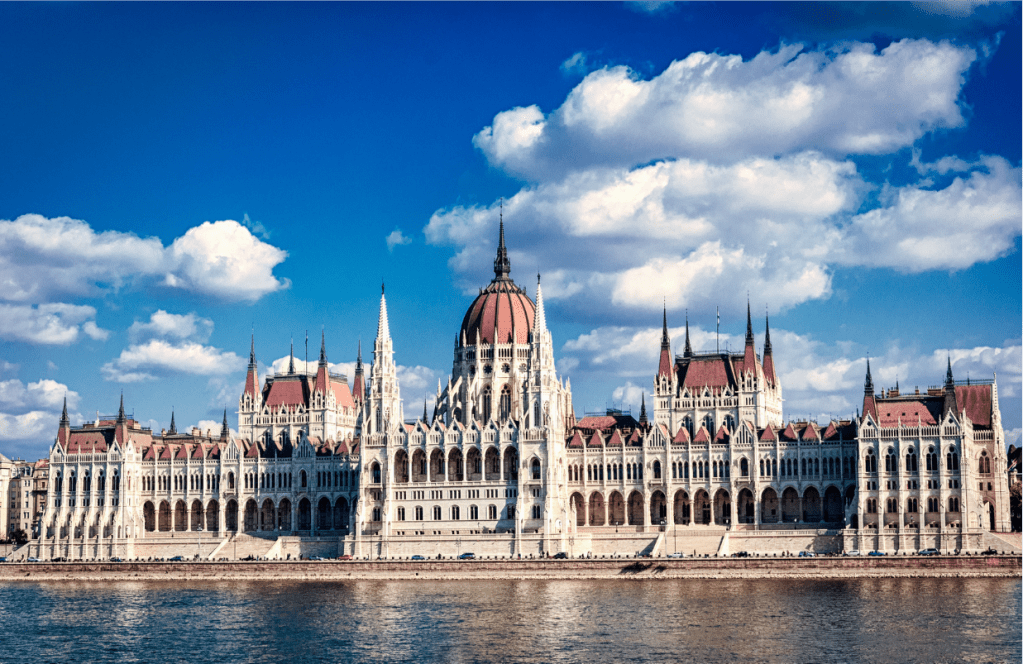
Budapest, the capital of Hungary became an important diplomatic location recently when the White House announced that a summit will take place between United States President Donald Trump and Russian President Vladimir Putin to discuss the peace agreement drafted by the United States. Although the summit was subject to high international interest, a statement released by the White House on the 21st of October announced that the summit would not take place after all.
Initial news of the summit were met with skepticism or even direct criticism by many parties for a wide range of factors. Critics cited Russia’s attitude towards the former peace agreements, the meeting of debatable progress between Volodymyr Zelensky and Donald Trump, and the location of the summit itself, Budapest. This article will follow the development of events through the lens of three major interested parties: Hungary, the United States, and the European Union.
While insights for the article were gathered from multiple European, Hungarian, and US-based news outlets, the analysis will center its focus on the following news outlets:
Telex is the most widely read news outlet in Hungary according to the Reuters Institute. The online website reports about domestic and international political affairs, sport, culture and popular culture. They published a total of 38 articles about the Budapest peace summit where primarily citations from Hungary’s political leaders and international politicians are cited.
POLITICO is an influential news outlet based in the United States (US), with specific focus on political reporting. Their European branch, POLITICO Europe is credited as one of the most trusted news outlets in the European Union, particularly about geopolitics and international affairs. The news outlet published 7 articles about the Budapest summit, with additional articles published on the US site.
The last meeting between Donald Trump and Vladimir Putin prior to the planned Budapest summit took place in Alaska, US in August, 2025. Considering the United States’ ambiguous relationship with Russia, the summit was regarded as a pivotal step towards a peace agreement between Russia and Ukraine. As quoted by The Guardian, President Trump entered the summit with firm expectations of a ceasefire agreement, while Vladimir Putin was inflexibly holding onto his claims of the occupied Ukrainian territories and a complete demilitarisation. Following a lengthy discussion between Trump and Putin and a short press conference, the summit ended prematurely, without a ceasefire deal. However, at the press conference, both state leaders expressed willingness to continue the negotiations (as Putin lightheartedly stated, “next time in Moscow”).
While the following summit did not in fact take place in Moscow, the two politicians agreed on the next best location: Budapest. The news was received with skepticism and often clear resistance on the international stage, as the suitability of Budapest as a neutral location was subject to frequent debate. The amicable relationship between Viktor Orbán and Vladimir Putin brought European politicians, as well as Ukrainian President Volodymyr Zelensky himself to express their concerns over the outcome of the summit. Zelensky, as quoted by POLITICO Europe, “did not consider Budapest to be the best venue”, and expressed doubts over Orbán’s willingness to “do anything positive for [the] Ukrainians”.
On the other hand, Hungary and the United States saw the agreement about the summit as an overly positive development. Hungary’s leading political parties, Viktor Orbán’s ‘FIDESZ’ and Péter Magyar’s ‘Tisza’ party both endorsed the news about the meeting (as cited by Telex.hu): in an X post, Viktor Orbán credited the summit as a “fantastic opportunity for peace”, while the leader of the opposition, Péter Magyar wrote in a Facebook post that “every initiative for peace is welcome”.
Magyar also commented on the relevance of Budapest as the location of the meeting. In the same Facebook post, he made remarks about the role of Hungary in previous wars, as well as the Budapest revolution of 23 October, 1956 against the then Soviet Union. After concluding thorough research among the current (1 November 2025) media and social media posts, a similar statement from Viktor Orbán about Budapest’s relevance as meeting location was not found.
Telex credited the selection of Budapest as the location for the summit to Orbán’s favourable politics towards Russia. This claim seems to be supported by the United States as well. In another article, Telex wrote that “Trump and Putin are meeting in Hungary because he and Putin both like Orbán”, which was extracted from Trump’s statement during a press conference in Washington D.C.
As the organization of the summit started, one of the most frequently mentioned problems was the EU airspace restrictions for Russian airplanes. Given Hungary’s geographical location (sharing borders with Austria, Slovakia, Ukraine, Romania, Serbia, Croatia, and Slovenia), the options for Vladimir Putin’s flight path without a special dispensation from the respective EU member states would have included either flying through Ukraine, or flying around the Balkans, where some states are not tied by the EU’s decisions. At the beginning of the organization, EU politicians were firm about keeping to the restrictions: the Lithuanian Foreign Minister stated that the country will not be opening their airspace for Putin, while Poland threatened Putin with enforcing the ICC arrest warrant if he tried to cross their airspace. As the organization progressed, Bulgaria expressed willingness to open their airspace for Putin, despite not receiving an official request from the Kremlin.
In the meantime, representatives of the involved parties were to agree on further details during a meeting. The US Secretary of State, Marco Rubio and Russia’s Foreign Minister, Sergey Lavrov were supposed to meet shortly after the announcement of the Budapest summit, however, no updates were shared about their planned meeting. A week after the announcement, statements arriving from Moscow began to signal that the meeting might not take place after all. Sergei Rybakov, as quoted by POLITICO said that “there was no agreement” for Rubio and Lavrov to meet, while Dmitry Peskov transmitted the Kremlin’s statement about the need for lengthy preparations. News sources, including (among others) POLITICO, CNBC, Telex, Reuters and PBS started reporting about the possible cancellation of the meeting. In the end, Rubio and Lavrov did engage in a call with each other, however, the summit was still cancelled on the 21st of October.
The White House, as quoted by POLITICO, evaluated the meeting between Rubio and Lavrov as productive, and thus eliminated the need for a personal meeting between President Trump and Vladimir Putin. The article published by Reuters about the topic also referred to the White House, however, they rather credited the cancellation to the strongly differing priorities of President Trump and Putin. According to the article, Marco Rubio stated after his meeting with Sergei Lavrov that “Moscow was showing no willingness to negotiate”, which drove the White House to cancel the summit. Telex quoted Trump’s statement of the meeting “not feeling right” when reporting about the developments.
Telex also reported on the sentiments of Viktor Orbán about the cancellation of the summit. They quoted the Prime Minister’s words to Pope Leo XIV: “what is late will come later”, and his statement to the Hungarian state-owned TV channel M1: “take it as a fact, that the peace agreement will be signed in Budapest” as a proof that Orbán remained convinced about the feasibility of the summit.
As of now there are indications of a summit taking place between President Trump and Vladimir Putin, however, the existence of the Budapest peace summit is still under discussion. The Parliament of Hungary remained open in his statements about hosting the summit, and although in the meantime Serbia also volunteered to host the meeting, according to Telex, their aspirations are groundless due to a statement made by the country’s Minister of Foreign Affairs about Ukraine’s sovereignty.
References:
Bicsérdi-Fülöp, Á. (16 October 2025). Trump Budapesten fog tárgyalni Putyinnal az orosz-ukrán háború lezárásáról. [Trump will negotiate with Putin about ending the war between Russia and Ukraine in Budapest]. Telex.hu.
Kirby, P. (18 October 2025). Can Putin’s ‘Flying Kremlin’ travel through EU airspace to Budapest? BBC.
Nádor, A. (27 October 2025). “Ami késik, az jön” – mondta Orbán a Vatikánban a budapesti békecsúcsról. [“What is late, will come later” – said Orbán in the Vatican about the Budapest peace summit]. Telex.hu.
Nyilas, G. (26 October 2025). Belgrád is bejelentkezett Trump és Putyin csúcstalálkozójára, közben olyat mondott a szerb külügyminiszter, amit a Kreml hallani sem akar. [Belgrade also checked in for the summit of Trump and Putin, while the Serbian Minister of Foreign Affairs said things the Kremlin does not want to hear]. Telex.hu
Poland warns Russia’s Putin against crossing its airspace for Trump summit. (21 October 2025). Reuters.
Sauer, P. (16 August 2025). Russia jubilant after Trump summit as Putin reportedly demands Donetsk and Luhansk. The Guardian.
Starcevic, S. (21 October 2025). Chances dwindle of quick Trump-Putin meeting in Budapest. POLITICO.
Stokols, E., Nerozzi, D. (21 October 2025). Trump’s second meeting with Putin is off. POLITICO.
Trump-Putin meeting cancelled after Moscow sent memo to Washington, FT reports. (31 October 2025). Reuters.
Vida, B. (17 October 2025). Trump azért Magyarországon találkozik Putyinnal, mert mindketten kedvelik Orbánt. [Trump is meeting Putin in Hungary because they both like Orbán]. Telex.hu.
Watson, K., Ott, H., Becket, S. (15 August 2025). Trump-Putin summit in Alaska ends with no deal on Ukraine ceasefire. CBS News.
Disclaimer of liability:
While we are transparent about all sources used in this article and double-checked all the given information, we make no claims about its completeness, accuracy or reliability. If you notice a mistake or misleading phrasing, please contact centuria-sa@hhs.nl .
This article also contains links to other third-party websites, which have only been placed for the convenience of the reader and does not imply endorsement of contents of said third-party websites.
 Home | Centuria Study Association
Leave a comment