
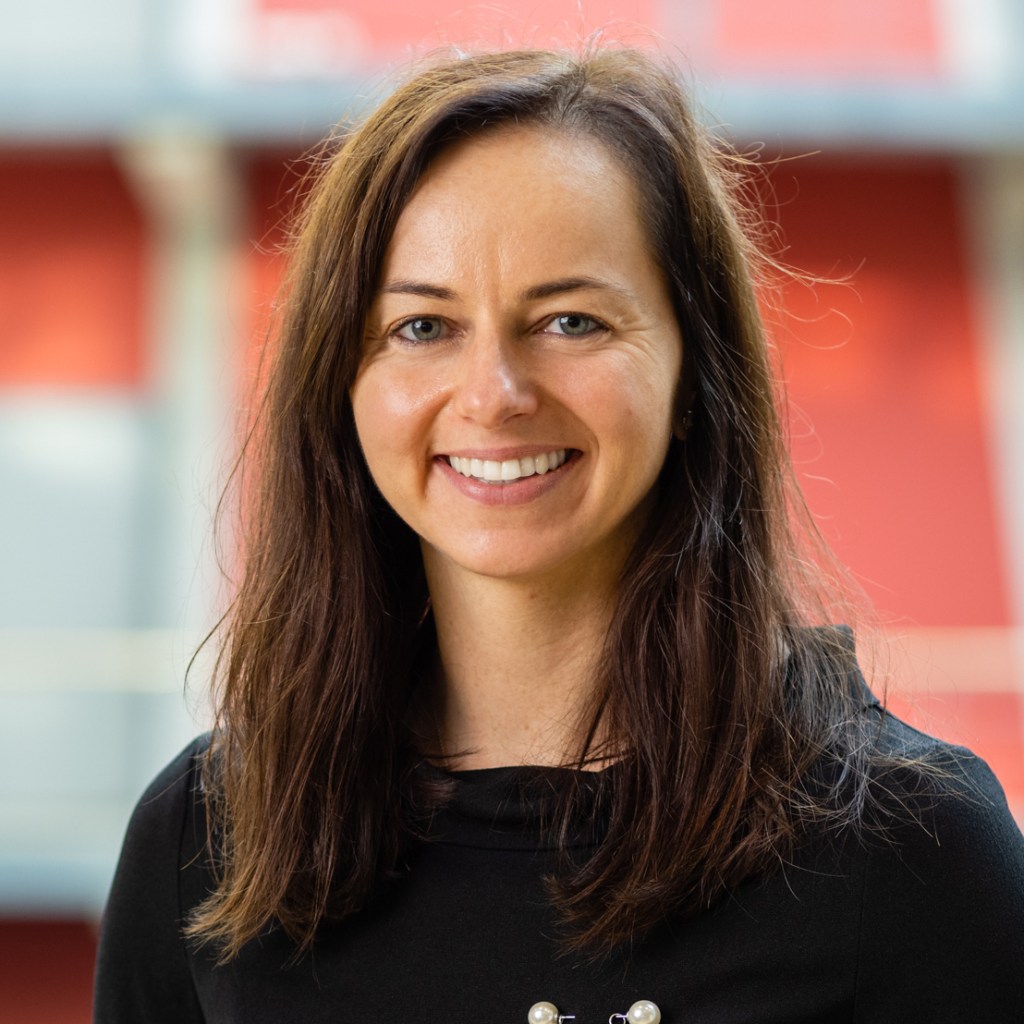
Interview with Dr. Anna Matczak
By Shaadiya Mohammed
During a recent discussion with Dr. Anna Matczak, Researcher and SSMS Senior lecturer in Comparative Criminology, we ventured into her journey to becoming the successful woman she is today, starting with her childhood in a small village of Poland, her education including her PhD, her continuous research journey, and her book.
Early Life
Upon being asked about her childhood, Dr. Matczak noted that she grew fond of attending school. “I liked September because it was the start of the academic year,” she recalled. She grew up in a very small village in the Western part of Poland where there were not many attractions. “It was a slow village life … Many of the families would be involved in agriculture and farming, so the only attraction I had was school,” she added. She attended the Maciej Rataj High School in Strzelce Krajenskie.
When asked about her interest in the subject she teaches: Criminology, she stated that she had no idea there was even a discipline called criminology. “I did not know about criminology, I just wanted to know more about crime and understand why people commit crimes and what we can do to stop people from committing crimes, especially after being a child witness to unhealthy relationships in my family and losing a friend in a car accident due to the driver’s drug intoxication”.
After obtaining her diploma, she then went on to the University of Warsaw where she studied Social Policy. This course was chosen due to her interest in the behavior of people, the support system, and the social structure. Her family and friends thought she was going to choose a law program however she believed it was too legalistic about the provisions of law, and she ultimately chose not to pursue the study. When asked about her experience there, she stated “It was the nicest time of [her] life, and [she] felt a strong student community and inspiration from her lecturers… I enjoyed studying Social Policy but did not feel that it was my niche,” she added.
Her Journey to the United Kingdom
After Dr. Matczak completed her degree, she made a pivotal move to the United Kingdom, leaving her family and friends behind. Upon her arrival in the UK, she started working in Academia while also working on her PhD at the London School of Economics and Political Science. “I worked as a researcher on a European project on domestic violence, and I also worked as a court and police interpreter. When asked about her experience working while also pursuing a PhD, she stated “It was an interesting opportunity for me to test what I learned theoretically in a practical way at my jobs.”
Reflecting her time in the justice system, Dr. Matczak explained that each case resonated with her in its own way. “All cases involving children are memorable but the one that stuck with me was the Daniel Pelka case because I struggled to find empathy for the offender”, she said.
Daniel Pelka, a four-year-old schoolboy, was starved and beaten for months before his death. He was living with his mother and stepfather. According to reports, Daniel Pelka had a long history of enormous negligence and abuse of the boy; physical and emotional abuse. “This case that I interpreted was well reported by the media because the boy was little”, Dr. Matczak noted. The family was visited by social services numerous times but never caught on to the abuse. Police were called 26 times for separate incidents regarding domestic violence and alcohol abuse, but no apprehension was made of the parents. Daniel Pelka was kept in a storage room with no daylight, no food, and some water. He was only let out to attend kindergarten and when he was at school, he would consume the plants due to extreme hunger. Daniel Pelka inevitably died of malnutrition and starvation. “I was called to come to court just for the visit of a psychiatrist and the suspect.” “As an interpreter, I never knew the details of the case, I just went to court and was expected to interpret what I heard and that was it; I was not given any access to any information … When the psychiatrist gave me the autopsy report and I started translating this is when I started to learn about the case”, she said. “This case was quite a lot emotionally to carry, and I remember at some point the suspect stood up, got angry, and pushed the chair and started walking around us so you could tell from his behavior that something psychological was happening to him and I felt unsafe”. During her court experience, Dr. Matczak worked as an interpreter for many cases ranging from cigarette trafficking of an organized Polish group to visiting the psychiatric wards in hospital for police interviews to rape trials. She also worked as an interpreter in the airport for the Polish people who were extradited to Poland from the UK due to their criminal history in the former.
After choosing to specialize in criminology, she enrolled at the London School of Economics and Political Science, because, as she noted, it is “one of the best universities in the world.” This was where she always wanted to study, and her fascination with the history behind the London School of Economics and Political Science contributed to her decision. The school was set up by founding fathers and mothers who were policy makers and practitioners. The idea behind the origins of the school was to help the vulnerable population; to research and improve the conditions of, not necessarily, the criminals, but also the poor and unemployed. When asked about her time and experience at the London School of Economics and Political Science, she stated, “I did not enjoy it as much as I did during my university years in Warsaw because I did not feel the community, students were more focused on individual journeys and I did not feel the group spirit.” During Dr. Matczak’s PhD studies, she faced some struggles, especially relating to her relocation, “I was missing my home, family, Polish food, bread, everything related to Poland … London at the time was very exciting for me but it is also a space where you can feel quite lonely and overwhelmed by the sheer [amount] of the people and the [size of] city”, she added.
Speaking from her experiences, Dr. Matczak’s advice to exchange or international students is, “The home sickness and loneliness will pass; it will never stay the same exactly. There might be some benefits that you will not see yet, but things can happen in your life that might be a blessing in disguise.” Despite her struggles, she enjoyed studying criminology and found her niche in this subject. Dr. Matczak recommends the London School of Economic and Political Science to anyone that wants to do their PhD in a similar field.
From Theory to Practice: Dr. Matczak’s Role in Advancing Restorative Justice Across Europe
Following her doctoral studies, she became involved in the ‘Restorative Justice: Strategies for Change’ project, fostering justice across Europe. In this project, there were representatives of 10 countries who came together to do something more applied than theoretical to overcome specific justice problems. Dr. Matczak did this with three of her colleagues from Poland: One, a scholar and academic, the other two, probation officers. Their task was to reach out to policymakers, municipalities, judges, etc. They were no longer doing research but filled more of an activist role; changing the reality. For example, Dr. Matczak and her three other colleagues managed to build a community of people who all had the same goals in mind in one city- Wroclaw. Wroclaw later became a restorative justice city.
Wrocłąw was proclaimed as a restorative justice city because there are many initiatives in the city that they promote dialogue, victim offender mediation basically suggesting that they have evidence to have a right to call themselves a restorative justice city. There was also a conference in Wroclaw where they had a huge exhibition presented at the main square of the city, and there was a quote from an article that Dr. Matczak wrote. “It was a reflection of the journey from theory to practice”, she said. Although the project had some minor accomplishments, Dr. Matczak is not confident that the project is going to work. “I am now pessimistic that it will work” and “When the project was going on, we were very optimistic and dedicated and thought we can achieve more but the project needed to end at some point and for the project to continue, we would need more budget, political will and support from the Ministry of Justice which we did not receive so the project ended”, she said. When asked about the inspiration behind joining this project, she stated, “It was the group of people who inspired the choice to join this project; they were very dedicated to the cause and applied nature of this project”, she added. Dr. Matczak and her three other colleagues bonded and became close friends during this project.
From Research to Real Change: Dr. Matczak’s Journey with Armenia’s Probation System
A unique opportunity arose when she joined a Council of Europe initiative in Armenia. Her role involved supporting the Armenian Ministry of Justice’s probation system by exploring the feasibility of victim mediation and helping to put it into practice.
When asked “What is victim mediation?” Dr. Matczak explained, “There is a service provided for offenders called [the] ‘probation service’. This service works directly with offenders; the job is to influence and shape their behavior, so they desist from crime. Victim offender mediation is one of the practices/interventions that probation officers can have at their disposal to impact the behavior of offenders but also to help victims with making sense of their victimhood experiences and to help them get empowered, find their voices, say how the crime affected their lives and also sometimes take part in decision making process about what kind of sanction the offenders should receive”. Victim offender mediation can happen directly between victims and offenders if both parties are ready and consent to it directly. This practice is always managed and coordinated by an independent mediator. Victim offender mediation can take place with all sorts of crimes during different stages of the justice system.
During her assignment, Dr. Matczak worked with a lawyer from Armenia, and she prepared a report which analyzed three other countries- Austria, Czechia, and The Republic of Ireland. Their analysis was based on how probation services in these three countries adopted victim offender mediation. During her assignment, Dr. Matczak had a ‘funny’ realization. “When you think of countries that you can learn from, you think of the US, UK, mostly Western, English-speaking countries but often I found that it is misleading and that you can learn from other countries. For [instance], Czechia is a good example of a country that has probation – mediation service.”
Dr. Matczak’s favorite task while working on this assignment was looking into different countries and comparing their experiences. She also recommends the practice of victim offender mediation. “Victim offender mediation is a promising justice practice; it is one of many options in the portfolio when working with victims and offenders. There is also evidence that shows victim offender mediation works, that victims can be very satisfied with the process; the practice can help to shape offenders’ behavior”, she noted.
How Dr. Matczak became a SSMS Senior Lecturer at The Hague University of Applied Sciences
During Dr. Matczak search for a new job, a position at THUAS was available and offered to her. She had an online job interview with the past team leader of SSMS and after the first interview, Dr. Matczak came to The Netherlands, The Hague for a second interview. Upon her arrival, she was tasked with giving a mini lecture to the SSMS staff and some selected students. “I did not know much about SSMS, I just wanted a new job, and I liked the applied nature of this program”, she stated. She also learned during her PhD that you need the experience from the professional field with the theory part and that is what made SSMS stand out to her. Dr. Matczak also stated, “I liked that SSMS has a nice network around it, the exposure to the field along with theory, and there was a great spirit in the team as well and still is”. Dr. Matczak moved to The Netherlands for the position of a SSMS Senior Lecturer in Comparative Criminology at the beginning of 2019. Since 2019, she has been teaching Criminology at THUAS.
SSMS is not her first teaching experience; Dr. Matczak taught in Poland, the UK and in summer schools in Nepal and Italy to many various international students. Her first teaching experience was in London. Dr. Matczak was 24/25 and because it was her first teaching experience, she felt insecure, inexperienced, and afraid of what the students would think. The subject that she always taught was Criminology. She loves teaching criminology because it is a subject that she is actively researching. Her work with probation officers and with different criminal justice professionals also contribute towards her teaching style. She likes telling stories to her students about her research, her field work experience, and her conversations with practitioners. Every country that Dr. Matczak taught has a different experience. From each of these experiences, she learned something new that would help her in her next stage as a teacher. SSMS has been the longest and most consistent teaching experience for Dr. Matczak. When asked if there were any struggles faced, she stated, “The beginning was a little difficult but in recent years, I have found my groove and feel comfortable in a classroom”. “Now, the actual teaching is never a struggle, but what happens around teaching; the fact that higher education changes, universities change such as experiencing budget cuts and political pressure. For example, not so long ago there was a discussion at the national level in the Netherlands whether we should phase out some of the English-speaking programs because there are too many which was considered as a problem, but the policy is now gone” and “There are so many ways that says this is the best way to teach and it is impossible to try and use them all so at a certain point you have to block it and start trusting yourself and see in the classroom what resonates with the students”, she added.
Balancing Two Worlds: Dr. Matczak’s balance between Research and Teaching at THUAS
Alongside her teaching responsibilities, she is also actively involved in research. She currently manages four different research projects. Three of them relate to the subject of climate change and policing, and one is an Erasmus + research project ‘Crossing Protect’. When asked about the goal of this project, she stated, “The goal was to see how they can train practitioners to use victim offender mediation or any other practices from restorative justice in cases of violence against women. Her contribution towards this project is the organization of online training of project practitioners.
When asked about her time management between research projects and teaching criminology at THUAS, she stated, “I am not working full time in SSMS, my teaching at THUAS is limited, it mainly revolves around the minors and thesis supervision but every year the quota between how much I teach and how much I research varies”. Last year, Dr. Matczak mainly researched- 0.8 of her time was towards research and 0.2 was towards teaching only. This year, more of her time 0.6 is towards teaching and 0.4 is for research. That is how Dr. Matczak manages her two worlds: teaching and research.
Dr. Matczak’s Book
One of Dr. Matczak’s most recent achievements is the completion of her book: Adapting to Climate Change in Modern Policing; The Rise of the “Eco-Cop”. Her inspiration behind this book was based on the experiences she had in The Netherlands, especially at the end of the Covid-19 pandemic. “I was never interested in climate change from a research perspective, I just knew it was a problem”, she said. After the pandemic and all the changes around us, Dr. Matczak started asking herself bigger questions, like what the impact of the pandemic on education and teaching was. After every big question, bigger questions would emerge. “I kept thinking what are the connections like health, crime, epidemiological issues in crime and then the specific question came to me, like is there a connection between climate change in crime and is there a connection between climate change and police work, whether the police even asked this question”, she recalled.
With these questions in mind, Dr. Matczak organized a workshop at THUAS thanks to the support of SSMS and MLR Research Group which was then attended by some police officers from the Dutch police. She was positively surprised to hear from their responses that the Dutch police do in fact ask this question. The Dutch police even have a dedicated unit to this specific question and Dr. Matczak found it interesting and decided to follow up on it. Adapting to Climate Change in Modern Policing. The rise of the “Eco-Cop” is supposed to show the police, not only the Dutch police but every other police, how climate change is increasingly changing their work. When asked if there were any difficulties writing this book, Dr. Matczak stated, “The actual writing process was not difficult, I really enjoyed writing the book, but I under-estimated the word count. I thought I had little to write but it was a lot, and a difficulty was deciding what to keep in the book and what not to include. “Another difficulty was making sure you present a coherent narrative that is a story that you will tell in an interesting way to police practitioners predominantly. It was a complex topic and difficult for the police to connect the dots”, she said. Dr. Matczak recommends her book to students. When asked if there were any other books in the making, she stated, “I already have an idea for my next book, but I need to wrap up my current commitments before I start working on it”.
Dr. Matczak’s advice to students
Her final message to students centers on investing in education while maintaining a healthy life outside school. Dr. Matczak stated, “Invest in your education but also do not let it define you. Continue having your hobbies and extracurricular activities; these can be a breath of fresh air and help you to relax. It is natural to go through struggles and that it will eventually pass. There is always an end to struggle; that is what life is. With a little bit of patience, resilience, and distance, your life will transform. Try to make friends and make the most of your experiences because these memories will last forever”. Dr. Matczak’s last advice is “SSMS is an excellent program and will equip you with the necessary knowledge skills. If you invest in this journey, you will have lots of opportunities in the job market. But invest in relations and human connections more as this is what truly matters in life”.
 Home | Centuria Study Association
Leave a comment