
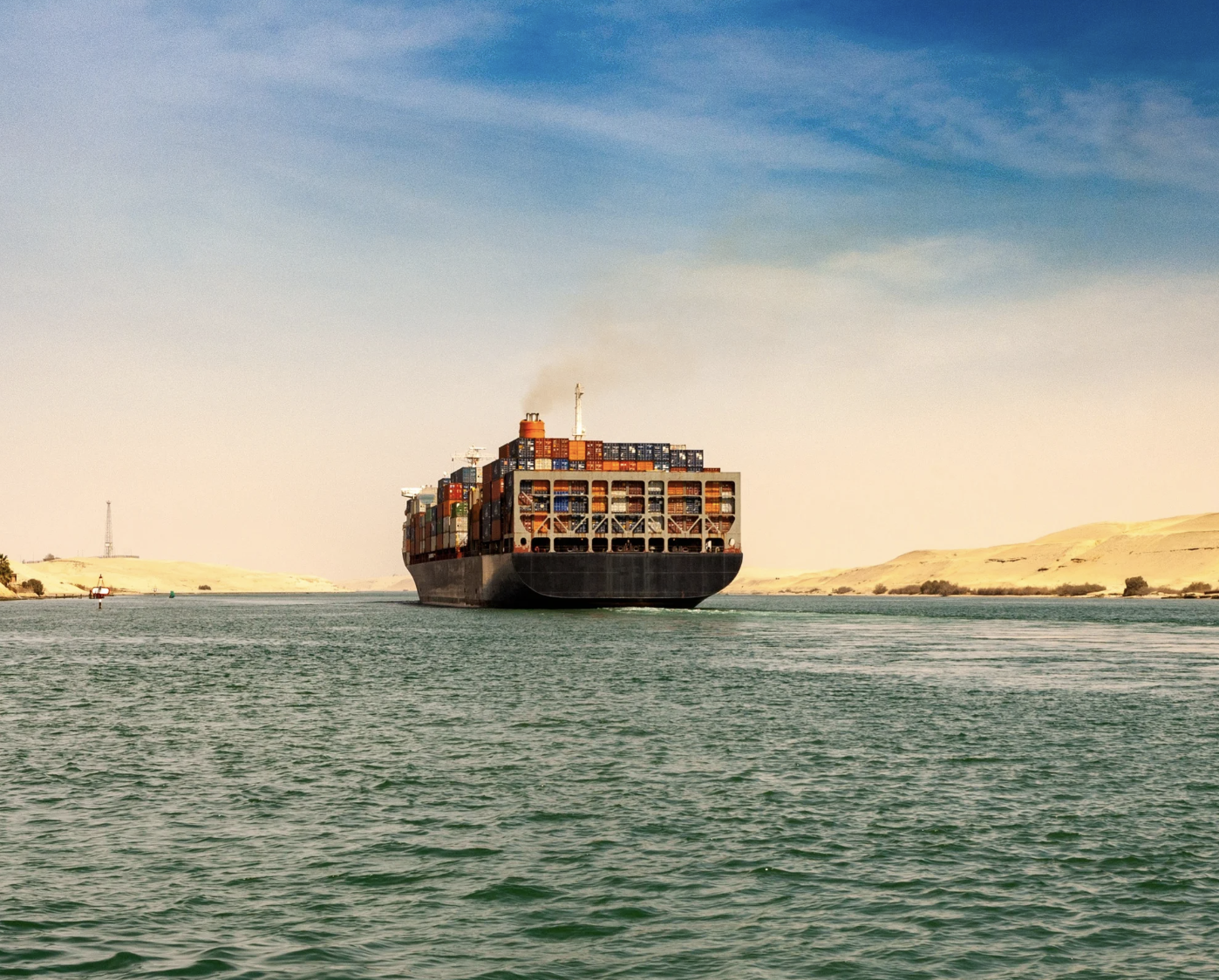
A comparative analysis of the Legal, Security, and Economic Implications Surrounding the Panama and Suez Canals
ILSA-Centuria Journal Collaboration Series
By Aurelie Levesque[1] and Anna Vlugt[2]
Abstract
Maritime chokepoints are among the most strategically significant waterways in trade, commerce, and geopolitics. The following article focuses on the Suez Canal and the Panama Canal, and their role in security, geopolitics, international law, and global trade. Fundamentally, these artificial waterways are located within sovereign territory, are central to global commerce, and the transport of gas and oil. However, they are increasingly vulnerable to geopolitical tensions, regional conflicts and political instability.
The article provides a comparative analysis of legal, security and economic implications of both canals. First, the paper explores interactions between maritime law and notions of sovereignty, neutrality and how geopolitical implications affect the functionality of the canals in practice. The second part examines the security implications of both canals, including the importance of political control and the presence of organized crime and trafficking, resulting in vulnerabilities in maritime supply chains.
The article concludes by demonstrating that regulating maritime chokepoints, conserving foundational legal principles, and ensuring security of the passageways remain a significant issue for international law and geopolitics. As modern disruptions are seen to cause global economic and security consequences, the protection of strategic interests, particularly at the national level, increases, often leading to abuse of power and blockages.
I. Introduction
Each encompassing 12 per cent and 6 per cent of global trade, the Suez and Panama canals are both crucial trade arteries and maritime corridors.[3] Though both are artificial, and located within sovereign territory and thereby not subject to international laws, they serve vital international economic, security, and trade functions, in addition to providing access to countries.
Due to the importance of these chokepoints, geopolitical tensions between national control, and risk of state interference are created. Modern international maritime law seeks to balance key principles including freedom of navigation and transit, state sovereignty, neutrality, whilst maintaining efficiency to safeguard the global economy. For artificial waterways such as canals, their governance is managed through treaties, customary law, involvement of international organizations and political power dynamics between states. However, despite formal legislative protection and codified governance of the canals through governments, both canals have historically shown that maritime chokepoints remain deeply political, particularly during conflict periods and, recently, geopolitical rivalries.
The legal analysis in section III therefore analyses the modern framework governing maritime law, and legal implications of maritime chokepoints including their strategic importance, as well as how ‘neutrality’ exists de facto.
However, as the previous section outlines, there are more than legal implications for the strategic importance of the canals. Section IV therefore explores the security implications of the Suez and Panama canals, providing a comparative analysis of both. Whilst they are both vital for international security in terms of trade and access to countries, a major weak point faced is the presence of organized crime and various forms of trafficking, which is increasingly difficult to detect and regulate. Furthermore, whilst both canals are similar in geopolitical origins, the analysis demonstrates their vast differences in terms of the reasons why countries are seeking control of them, and where larger problems of organized crime exist.
II. Overview
- Panama Canal
The Panama Canal is an artificial waterway whose construction began in 1881 by the French, who later relinquished control to the United States (U.S.) in 1904. Ten years later, in 1904, the Panama Canal was completed and opened for maritime trade and traffic. By 1999, the U.S. fulfilled the conditions of the treaty signed in 1977 and gave control of the canal to the Republic of Panama. Following this change in control, Panama began to expand the canal, completing the endeavour in 2016 [4].
Covering 50 miles (or 80 kilometers) in length [5], the Panama Canal quickly became a vital aspect of global trade, with 6% of maritime trade transits passing through the canal [6]. In addition to its general involvement in the economy, the Panama Canal played a key role in the U.S.’s foreign policy as it connects the Pacific and Atlantic (via the Caribbean) oceans [7].
The role of the Panama Canal in politics and economics is only one part of the canal’s significance. Using a lock-based system, the Panama Canal became an innovative piece of maritime architecture as the locks lifted the ships above sea level with zero reliance on pumps. For a ship to pass through the canal, it must be lifted 26 meters (or 85 feet) with water filling the three locks to move the ship over the mountains [8].
The engineering genius that resulted in the Panama Canal has withstood over 100 years of weather damage, normal wear-and-tear, and technical issues[9]. This resilience, in addition to the canal’s political and economic importance, has cemented its status as an invaluable maritime chokepoint within the Americas.
2. Suez Canal
The Suez Canal is an artificial waterway connecting the Mediterranean Sea and the Red Sea.[10] The canal is located in Egypt, and runs north-south across the Isthmus of Suez, separating Africa from Asia.[11] It provides the shortest maritime route between Europe and Asia, shaving off around 8,900km from the journey and avoiding a detour around the Cape of Good Hope.[12] With a length of 193km, and a width of 225 meters at its narrowest point, it is one of the most strategic and vital waterways for global trade and the worldwide economy.[13]
First opened in 1869, the canal had very few transits, around 2 per day.[14] Transits peaked in 2023 at 26,434 annually, and around 5 million barrels of oils per day were transported through the canal.[15] It facilitates around 12 to 15 per cent of global trade, and nearly 30 per cent of global container traffic.[16] As the canal is nationalized, it serves as Egypt’s third largest source of national income, behind overseas labour remittance and tourism, representing around 10% of its GDP.[17]
However, the canal’s strategic significance has led to dispute. Regional conflicts and political instability in Yemen, Sudan, and more recently the Strait of Hormuz, poses threats to transits through the canal, despite no formal closures.[18] Consequently, conflicts in the region and attacks on container ships risking the safety of seafarers pose threats to maritime security, disrupt trade flows, and increase transit risks.[19] Given the importance of this waterway, the UN has repeatedly called for “cessation of hostile activity” and the need for “regional and international efforts for peaceful resolution” and protecting the global economy.[20]
III. International Maritime Law
International maritime law, also referred to as admiralty law, refers to an ius commune area of law, specifically law applicable to more than one jurisdiction.[21] Maritime law is composed of maritime customs, codes, conventions, treaties and practices,[22] and regulate maritime organizations, create training and safety standards, govern dispute resolution and jurisdiction, and prevent pollution.[23] Today, modern maritime and commercial law must balance sovereignty, with international and commercial interests, and freedom of navigation,[24] and ensure that key global shipping lanes remain undisrupted and avoid interruptions in the global supply chain. The Suez and Panama canals demonstrate the tension between these principles and interests, despite formal legal commitments.
The following section outlines general maritime law frameworks, institutional governance and jurisdiction including relevant International Organizations (IOs), dispute resolution mechanisms, and finally, specific legal implications of the Suez and Panama canals.
Historical development
The origins of maritime law date back to the 7th Century with Rhodian Sea Law and Roman maritime rules.[25] These rules established foundational principles for maritime trade and conflict settlement reflected in modern rules today. The Middle Ages marked a turning point in maritime law, where new guidelines addressing rights of merchants, dispute resolution, and obligations of crew and shipmasters were defined.[26] Finally, early modern legal frameworks and practices were primarily influenced by the respective Dutch and English maritime golden periods.[27] Notably, the early concept of lex mercatoria, or the law of merchants, was mainly developed during the Dutch Golden Age, as the Dutch legal system “placed an emphasis on commercial norms and practices within the maritime sector”, modern dispute resolution mechanisms, and innovative maritime insurance procedures.[28]
With the expansion of global trade, maritime rules evolved to reflect new, large-scale commercial realities resulting from colonial empires, linking Europe with Asia, Africa and the Americas.[29] Whilst maritime rules were present and numerous, they were yet to be codified, creating confusion between varying national legal requirements.[30] In response, the International Convention for the Unification of Certain Rules of Law pertaining to Bills of Lading (hereinafter the Hague Rules) was founded in 1924. The Hague Rules was the first international convention governing rights and obligations for the carriage of goods at sea.[31] The rules established fundamental principles that carriers could not contract out of, including ‘seaworthiness’ and duties of care when carrying goods, and were subsequently revised in 1968 into the Hague-Visby rules.[32] However, these were deemed inadequate due to the rapidly increasing number of commercial shipping vessels, and thus, under the direction of the United Nations Commission on International Trade Law (UNCITRAL), the Hamburg rules were adopted in 1978. These rules extended obligations for carriers, who were now held under higher levels of duty of care to protect cargo on the ships.[33] Lastly, in 2008, the Rotterdam Rules were adopted, unifying the Hague-Visby rules and the Hamburg rules creating a consolidated, up-to-date legal framework.
Legal framework for modern maritime and commercial law
Modern maritime law consists of treaties (i.e. codified legal norms and principles), customary international law, institutional regulations, and state practice. Strategic waterways, such as the Panama and Suez canals have a unique legal position, because they are geographically located within sovereign territories, but are international in terms of economic and political functions.[34]
Treaties
Maritime law functions with a ‘layered’ treaty framework, which regulates navigation, jurisdiction, environmental obligations, transit rights, and commercial shipping. Both canals are governed through differing legal agreements.
UNCLOS: Foundational framework of maritime law
The United Nations Convention on the Law of the Sea (UNCLOS) serves as the foundation for all legal and security-related maritime regimes.[35] It serves as the “constitution of the sea” and outlines jurisdiction, sovereignty and usage rules and principles that States must abide by.[36] Its key provisions include the freedom of navigation,[37] the right to innocent passage,[38] transit passage,[39] resources and deep seabed mining,[40] and defines maritime zones.[41] Importantly, both canals are an exception to these rules. As artificial waterways within sovereign territories, the UNCLOS does not fully govern them in the same way as natural straits, creating legal ambiguities and political implications for competing interests over the canals.
The Corfu Channel case defined a ‘Strait’ as a “geographical situation as connecting two parts of the high seas and the fact of its being used for international navigation”.[42] However, a ‘canal’, like a Strait, connects two high seas together, but their function is determined by the volume of international traffic and the multiplicity of countries that use them, including the Suez and Panama canals.[43] It is important to note that, due to the artificial nature, the Suez and Panama canals are not subject to the UNCLOS, as it only governs natural waterways. However, areas surrounding the canal are subject to its jurisdiction.
The Suez Canal and the 1888 Constantinople Convention
The Suez Canal, an artificial and man-made waterway, is located entirely within Egyptian territory. International law states that “canals are in principle subject to the territorial sovereignty and jurisdiction of the state or states which they separate or traverse”.[44] The UNCLOS thus does not govern the canal, but does govern the surrounding waterways, including the Bab-el-Mandeb Strait and the Red Sea, both connecting to the Suez Canal.[45] Specifically, both these waterways must guarantee the right of innocent passage in territorial waters, and the right to transit passage “in straits used for international navigation”, and freedom of navigation within EEZs.[46]
Due to its location and nature, the Suez Canal is therefore solely regulated by the 1888 Constantinople Convention which protects the right to free passage in times of peace and war within the Canal.[47] Furthermore, the principles of neutrality and non-discrimination apply and must be upheld by Egypt.[48] The Canal is owned, maintained and operated by the state-owned Suez Canal Authority (SCA).[49]
Panama Canal Treaties
The Panama Canal evolved from quasi-imperial governance, to sovereign national control, whilst enforcing international customary obligations of neutral passage. Opened in 1914 after ten years of construction, the Panama canal revolutionized global trade and shipping.[50] It connects the Atlantic and Pacific oceans together, significantly reducing shipping times. Before construction, Panama was part of Colombia, so negotiations for building a canal took place between the United States and Colombia.[51] Initially, the Hay-Herrán Treaty was signed, but was rejected by the Colombian senate, which ultimately set up the Panamanian separation movement, and resulted in a subsequent treaty, the Hay-Bunau-Varilla Treaty.[52] The Treaty was signed by the French plenipotentiary ambassador for Panama in Washington, and in 1904, the US bought out the French interests in Panama for USD 40 million.[53]
The Hay-Bunau-Varilla Treaty led to decades of conflict between the US and Panama. The Treaty itself granted the US the rights “in perpetuity the use, occupation and control of [the canal zone] for the construction, maintenance, operation, sanitation, and protection of [the] Canal”.[54] In addition, the Treaty grants the US the “rights, power and authority” within the canal zone to possess and exercise as “if it were the sovereign of the territory”.[55] The Treaty gave rise to 75 years of conflict between the two states, and caused significant socioeconomic issues. The ‘canal zone’ divided the country geographically, in addition to causing high unemployment after the canal construction was finalized, causing Panama’s first economic crisis.[56] Furthermore, the treaty did not allow for Panama to have a share in revenue or receive financial benefits from the canal.[57]
These inequalities fuelled political uprisings in 1964, leading to death and injuries of dozens of Panamanian nationals.[58] After lodging a complaint with the Organization of American States, then-US President Lyndon B. Johnson acknowledged Panama’s claims, stating that “it is [their] obligation as allies and partners to review these claims and to meet them […] when just and possible”.[59] Ten years later, the Torrijos-Carter Treaties on canal operations and permanent neutrality was signed in 1977. These treaties ended the concept of perpetuity, abolished the ‘Canal Zone’ and set the hand-over and full control of the canal to the Republic of Panama in 1999.[60] Today the Canal is managed by the Panama Canal Authority, an autonomous entity separate from the Panamanian Government, and remains under exclusive Panamanian sovereignty.[61]
Legal implications of key maritime chokepoints
Maritime chokepoints, according to the UN Conference on Trade and Development, are defined as “critical points along transport routes that facilitate the passage of substantial trade volumes, [serving] as vital arteries for global commerce”.[62] As alternative routes are often limited, “disruptions can lead to negative impacts in supply chains and to systemic consequences that affect food security, energy supply and the global economy”.[63] Both the Suez and Panama demonstrate how maritime chokepoints impact legal principles, and change when geopolitical influence, and economic and strategic interests are involved.
Strategic importance of maritime passageways in global trade
The Suez and Panama canals, both narrow and key access points, serve as strategic maritime passageways in global trade. The Suez canal links Asia and Europe, and cuts approximately 6,000 kilometers, around 9 to 14 days, from a ship’s journey between Singapore and Rotterdam, as opposed to ships circumnavigating Africa.[64] The Panama canal links the Atlantic and Pacific Oceans, and reduces maritime distances by 13,000 kilometers, and the New York to Los Angeles route by 60%.[65]
The Suez canal is both a maritime chokepoint and a key access point for global trade and energy security.[66] Around 12 to 15 per cent of global trade, equivalent to over 1 trillion USD in goods transiting through the waterway annually.[67] In terms of oil, around 9.2 million barrels per day pass through the canal.[68] Furthermore, its toll revenue serves as a major economic stream of income for Egypt.[69]
Concurrent disruptions of both canals are currently causing significant disruptions impacting the global supply chain.[70] This can, subsequently, undermine economic growth, significantly drive up costs, and upend the flow of energy and food, which puts vulnerable economies at risk.[71] Due to growing challenges in both canals, the UN Commission on Trade and Development, in its Review of Maritime Transport, stated that these key chokepoints are “increasingly vulnerable to geopolitical tensions, conflicts and climate change”, disrupting shipping routes and supply chains.[72] As over 80% of world trade volume is carried out by sea, the UNCTAD called for “swift and coordinated actions to safeguard global trade” and mitigate effects of chokepoint vulnerabilities.[73] The centrality of both chokepoints to the global economy can magnify geopolitical and legal tensions into global catastrophes, and impact consumers worldwide.
In the same report, UNCTAD calls for addressing the need to build “more resilient and reliable supply chains”.[74] Building resilient supply chains for maritime trade includes reducing risks by relying on diversified sourcing and manufacturing locations and increasing inventory.[75] Furthermore, given the disruptions seen in both the Panama and Suez canals, there is a clear need to enhance resilience to ensure “unhindered global maritime trade flows”, through, inter alia, diversified shipping routes, enhanced cooperation among shippers, logistics providers and ports to optimize efficiency, and particularly improving international collaboration.[76] By strengthening trade pacts, diplomatic relations, and alliances, maritime trade flows will be smoother and more predictable, and states can collaborate together to manage risks and disruptions in supply chains.[77]
Neutrality in practice
Despite its obligations of neutrality, the Suez Canal Authority and the State of Egypt have been repeatedly criticized for failing to uphold this principle. Notably, from 1948 onwards, Egypt prevented Israeli ships from using the canal, as the state claimed it was at war with Israel and that it was entitled to maintain the security of the canal.[78] Raising these claims to the UN Security Council, Egypt asserted its right to self-defence.[79] Despite involvement of the UN, resolutions failed and blockades continued. The 1979 Treaty of Peace between Egypt and Israel and its signature subsequently stopped interferences with the passage of Israeli ships through the Canal.[80] However, actions during the Arab-Israeli wars were evidently dictated through strategic commercial interests.[81] Legal neutrality, despite its presence in black-letter law, thus does not eliminate geopolitical leverage of States.
Today, the Suez canal faces contemporary concerns regarding Red Sea security. The canal lost significant momentum after a series of Houthi attacks from 2023 onwards in the Red Sea.[82] The Red Sea is a key corridor for maritime shipping, connecting the Indian Ocean to the Mediterranean Sea, via the Suez Canal.[83] The area handles around 12 to 15 per cent of international maritime trade.[84] However, attacks involving missiles, drone strikes, and armed groups have led to significant security risks for transits through the area.[85] In early 2026, tentative returns to the Red Sea and transits through the Suez Canal began, mostly from small container ships.[86] However, a broad return to transits through the area requires significant improvement of safety conditions for crew, and sustained stability.[87] As ships avoid the Red Sea area and divert to the Cape of Good Hope, decreasing revenue for the Egyptian Government, in addition to causing global supply chain and economic disruptions.
As the Red Sea and surrounding maritime waterways such as the Bab al-Mandab Strait, and, more prevalently the Strait of Hormuz, grow in tension and conflict, geopolitical problems test the effectiveness of international maritime law.[88] Despite the Suez Canal not being governed by the UNCLOS, and no current closures of the canal, surrounding conflicts in the Red Sea and the Strait of Hormuz evoke the Convention nonetheless. For example, attacks by Houthi rebel groups in the Red Sea limit accessibility towards the Suez Canal, despite no formal closures and formal entitlement to freedom of passage.[89] This causes shipping companies to re-route around Africa, causing delays and raising costs, causing de-facto suspension of the freedom of navigation.[90]
The extent to which the UNCLOS serves as an effective legislative tool to ensure maritime security is heavily debated by scholars. Several examples can be found from non-compliance of states or contestation of certain principles of the Convention. For instance, China’s ‘9-dash line’ claims a significant portion of the South China Sea, beyond the 200 nautical mile exclusive economic zone it is entitled to under the Convention.[91] Moreover, a key international actor, the United States has yet to ratify the Convention, due to oppositions on key seabed mining provisions and lack of veto power.[92] As a proactive security partner, its influence is heavily limited by its non-ratification.[93] It has a severely restricted role within maritime dispute settlement bodies, such as the South China Sea arbitration, or Russia’s extended stakes of the Arctic seabed.[94] Thus, protection of its collective security and economic interests are reduced.[95]
Regarding tensions and conflict in the Red Sea and Strait of Hormuz regions where the US is a primary actor, the effectiveness of the Convention is further reduced by its lack of ratification. Therefore, despite efforts of other state actors, the freedom of navigation risks being undermined, not due to formal closures, but armed threats from non-state actors.[96] As these groups are not signatories, state liability for attacks of ships by third-parties creates an accountability and enforcement gap.[97] Due to these threats, ships re-route, impacting the global economy. Therefore, the Convention shows a clear gap that the original drafters did not consider, namely non-state actor involvement in conflicts, such as rebel groups.[98] This creates ambiguity, raising questions on the effectiveness of the UNCLOS in managing geopolitical tensions and legal gaps within current conflicts.
The Panama Canal, in comparison, has seen a historically US-based dominance, repeatedly testing its neutrality obligations due to regional conflicts. However, US influence continues today, with escalating tensions between the US and China, the two biggest users of the canal.[99] The current Trump administration has repeatedly declared intentions to “retake” control of the canal, citing excessive tolls imposed on US ships and that these unfairly penalised US economic interests.[100] China, on the other hand, has gradually increased investments in multiple sectors of the Panamanian economy and expanded its influence, particularly under its Belt and Road Initiative.[101] Panama now exists in a delicate diplomatic position, as it attempts to balance the interests of two global superpowers attempting to control a vital maritime asset.[102]
IV. Security Implications
The Politics of Security
Both the Panama and Suez Canals are considered to be (artificial) maritime chokepoints,[103] narrow passageways that connect two major bodies of water, which are vital in trade routes and military strategy [104]. If a single country is in control of a major chokepoint (canals, straits, valleys, etc.[105]), that country would be in the possession of significant military and economic power. Control over chokepoints like the Panama and Suez Canals holds the utmost importance concerning the politics of security, specifically in relation to the motivations behind such control, and its geopolitical basis. The following section will identify and analyse why control over the aforementioned canals is instrumental in state security, as well as the specifics of each canal.
Political and Security Interests in the Control of Military Chokepoints
When a country has control over a chokepoint, it grants them the ability to limit access or close the canal (or strait) entirely [106]. In more recent history, the closure of the Strait of Hormuz may serve as a prime example of the implications of such actions[107]. The Strait, which falls under the control of Iran, has been a point of tension since the start of the U.S.-Israeli war on the Gulf State. [108]
In a form of retaliation against the U.S. and Israel, Iran closed the Strait of Hormuz, effectively cutting off 20% of oil and gas supplies that the world relies on. As a result of this action, gas, energy, and oil prices reached historic highs, affecting the global economy as a whole, including Americans and Israelis. [109]
Iran’s control over and closure of the Strait have provided it with significant leverage over its adversaries. In peace talks between the states at war, Iran agreed to reopen the Strait under the condition of a ceasefire, a clear show of force and power that Iran was only capable of because of their control over a chokepoint.[110] By having this control, Iran is/was able to protect their national security, as those who are attacking it need the Strait to remain open, lest it cause severe economic distress to their own country.
This concept of control over chokepoints as vital to a state’s security is an old, geopolitical concept introduced by U.S. naval historian Alfred Thayer Mahan.[111] Mahan’s theory, coined as navalism, emphasizes a country’s navy and marine power in relation to its status as a state.[112] The theory of navalism was based upon Great Britain’s strength as an empire, attributing most of the success to its control over the seas, large population (and subsequently a large navy), and access to stepping stones and chokepoints. In Mahan’s writing, he analyzed Great Britain’s success through a maritime-based lens and sought to adapt this theory to be relevant for the United States.[113] Mahan’s theory of navalism was later applied to U.S. military strategy, ultimately leading the country to its current place as the number one naval power in the world[114], and, to many, the most powerful country overall.[115]
After its application to U.S. military strategy, it became clear that navalism was a theory with merit, and that success as an empire/state is inextricably linked to that of a strong sea presence and navy.[116] If one continues to operate under the assumption that Mahan’s theory is true, for a country to become politically powerful and secure, that country must become a strong naval power as well. To become a said naval power, the country must meet the previously mentioned requirements, one of which is access to and control over chokepoints, like the Panama and Suez Canals.
Control over military chokepoints is vital for a country when it comes to its political and security-based interests, thus explaining why countries often fight for control over canals like those of Suez[117] and Panama.[118]
Political and Security Interests of the Suez Canal
In addition to the general interests countries might have in controlling chokepoints, each specific chokepoint has specific qualities that motivate countries to try to gain control over it. The Suez Canal is in a particularly coveted geographical location, which has resulted in greater economic dependency and further political interest.[119]
Sitting at the intersection of the European continent and the Asia-Pacific,[120] The Suez Canal serves as an integral part of the route that 12% of all traded goods pass through, proving the vitality of this chokepoint.[121] Additionally, nearly two million barrels of oil pass through the canal each day, including crude oil moving primarily towards Asia, although a significant amount moves towards Europe[122] as well. In addition to the Suez Canal being of the utmost importance to the oil trade, large amounts of consumer goods, manufacturing goods, agricultural products, and more also pass through the canal, furthering its importance in global trade.[123]
The Suez Canal has solidified its status as a vital aspect of the economy, which only deepens its political and security purposes. As previously mentioned in the example of the Strait of Hormuz, control over chokepoints serves as a strong leverage point in security conflicts. The same theory remains true when applied to the Suez Canal, especially in relation to its economic importance. Additionally, the canal plays a key role in India’s maritime strategies[124] as well as the overall security of Egypt.[125]
Political and Security Interests of the Panama Canal
Despite the geographical distance between the two chokepoints, the Panama Canal is of the utmost political importance, as is its Egyptian counterpart. That being said, the Panama Canal is under a consistent amount of stress due to its strained connections with the U.S., as well as China’s regular use of the canal.[126]
Upon the start of U.S. President Trump’s second term, the newly inaugurated head of state declared that the U.S. would ‘reclaim’ the Panama Canal, having given up control to the Republic of Panama in 1999.[127] This newfound interest in the canal stems from the administration’s fear of Chinese influence and expansion into the Western Hemisphere.[128] Although China has expressed interest in the canal, the validity of President Trump’s claims[129] that the former is in control lacks substantive evidence and is highly debated.[130]
Assuming the U.S.’s fear of China’s control of the canal is warranted, this points to a major national security issue for the former. If the Republic of Panama were to seize power and control of the vital canal from the U.S. to China, not only would this allow the Chinese to control major aspects of the U.S. economy, but it would also give the Chinese geographical access to the States that the former has never previously possessed.[131] Geographical access as direct as the Panama Canal would allow China to have access to the U.S., which may cause major repercussions for the two countries’ fragile, complex relationships.[132]
Controversy of the claims aside, the U.S. government has publicly declared that it will reclaim control of the Panama Canal[133], despite the Republic of Panama and its Latin American allies stating that under no conditions would the canal become part of the U.S. again.[134] Although there have been no tactics or strategies on the retaking of the canal[135], it would not be unreasonable to assume that the use of force would be under consideration, due to the President’s take on Greenland.[136]
The strained U.S.-China relationship aside, the Panama Canal is still a vital aspect of international security. Similar to the Strait of Hormuz and Suez Canal, closure of the chokepoint may serve as a leverage point in altercations between states. This is especially true in the case of the U.S., and 70% of goods going through the canal are either going to or from the country.[137] However, Trump’s interest in the canal exceeds security concerns, as the sitting president claims that the country is being overcharged for the goods passing through the canal and that the Republic of Panama has been treating the U.S. unfairly, thus providing another motivator for regaining control.[138]
From a geopolitical perspective, control over chokepoints, such as the Panama and Suez canals, may be vital for the countries that hold such control as well as the countries that aspire for that control. Additionally, the canals in question play major roles in the global economy; a blockage of either would likely cause substantial economic backlash to any country that receives or sends goods through the canals. The creation of such backlash may serve as a leverage piece in controversial or tense international security matters, demonstrating how intertwined politics and security are with maritime chokepoints.
Organized Crime
Organized crime networks span the globe, encompassing crimes such as trafficking, robberies, and various financial crimes.[139] When one focuses on the trafficking aspect of organized crime, the transportation of goods, people, wildlife, and more are central to the process.[140] As such, different networks have utilized several forms of transportation, including maritime trafficking. Maritime trafficking, or maritime smuggling[141], involves any sort of body of water being used as a method of transportation for the illegal activities of the responsible organized crime groups.[142]
The following sections will focus on various forms of trafficking that occur via maritime routes globally. That being said, human trafficking will not be addressed due to only 1% of human trafficking cases having been done via maritime routes, whereas drug, weapon, and wildlife trafficking are extremely prominent on the seas.[143] Additionally, this chapter will include a comparative analysis between the Panama and Suez canals and the types of trafficking that are primarily found in the chokepoints.
Drug Trafficking
Drug trafficking and smuggling are crimes that cover the entirety of the globe as the drugs are taken from their point of origin, transported, and distributed[144] across multiple countries, regions, and continents from Asia to the Americas.[145] Trafficking via the seas is the primary form of transportation for drug smugglers, where the primary drug being transported is cocaine.[146] In addition to cocaine, drug traffickers also commonly smuggle heroin and methamphetamine via the sea.[147]
Smuggling drugs via the sea is one of, if not the, most common pathways for organized crime groups.[148] That being said, the image of a secret ship attempting to sail to an unprotected shore would be wildly incorrect. The primary transporter of illegal drugs to their country of consumption is unknowingly commercial ships that enter through all of the legal channels and are subject to searches upon arrival.[149] Alternatively, some organized crime groups may use more innovative, less detectable strategies. For example, some organizations have been able to obtain or build submarines, or narco-subs, making the transportation of their contents nearly undetectable while carrying up to 25 million USD worth of cocaine.[150]
An additional, alternative method is that of parasitic attachments or “parasite smuggling”. This rather dangerous technique involves a diver attaching a metal ‘torpedo’ to a ship before or while in transit, which can then be removed by a diver once the ship (or the drugs) has reached its destination.[151] Although incredibly difficult to detect, at least one diver has died in the attempt to remove the torpedo, and another has gone missing, along with the cocaine.[152]
In recent years, cocaine trafficking into Europe, originating in Latin America, has reached an all-time high.[153] This increase of product into the continent sits on the shoulders of evolving tactics to minimize such trafficking[154]; however, the traffickers are evolving as well, consistently discovering new ways to move the illegal substances.[155] One key way that organized crime groups are involved in the trafficking of drugs is through advanced concealment techniques.[156] Cases such as this include placing the contraband into industrial equipment or machinery. Additionally, the use of food as a ‘drug mule’ has become a well-known and fairly common tactic.
In 2024, U.S. border control famously seized five million USD of methamphetamine while in transit. The methamphetamine’s storage during transportation, however, is what caught the public’s eye. Having been wrapped in green, painted plastic, the drugs were attempted to be disguised as watermelons. Despite mixing the fake watermelons in with several real ones, the working U.S. border agents were not fooled.[157]
This example, however, is one of the lucky times that the illegal substances were caught before reaching their destination. It is impossible to know exactly how many times organized crime groups have slipped through the cracks without detection. This is especially true when the new concealment tactics are also combined with recent technological advancements and alternative routes.[158]
These, in addition to many other techniques and strategies, are alleged to be behind the drop in cocaine seizures at the Port of Rotterdam.[159] In the case of drug smuggling, lower seizures do not mean fewer drugs entering a country; it simply means fewer drugs are being detected upon entering a country, allowing more to cross the border.
Firearms Trafficking
No matter a country’s policy on the purchase and possession of firearms, the illegal transfer of firearms (or parts of firearms) poses a threat to that country’s national security and international security as a whole.[160] Upon a firearm entering a country, it can threaten security in several ways, including providing firearms to a community of people who may be unable to purchase them legally due to criminal records, affiliations (particularly to gangs), or mental health conditions.[161] Additionally, trafficked firearms may enter warzones, allowing armed groups to engage in additional violence. Finally, terrorism is often exacerbated by arms trafficking, as it provides a channel for extremist groups to purchase weapons without alerting the government to said purchase.[162]
As far as maritime-specific trafficking goes, seized vessels carrying illegal firearms have been known to hold 5 times the amount of firearms as trafficking done by plane, road, or other transportation methods.[163] Due to the size of the seizures, the rare occurrence of sea-based arms trafficking is easily dismissed, as they still account for 6% of illegal firearms seized. Of course, these numbers do not account for the number of firearms that were not intercepted, indicating that a significant amount of firearms are moving cross-border without law enforcement’s knowledge. Despite trafficking by sea being a less common method of transportation than the alternative[164], bulk shipments of arms are done primarily by sea, motivating investigators to reframe their search and priorities toward the ‘big fish[165]’.
During the trafficking of firearms itself, detection is unlikely as traffickers have become skilled in storing the arms amongst other goods in transit without alerting the captain and a significant portion of the ship’s crew.[166] However, there have been several reported cases of the aforementioned captains and crew being involved in the trafficking. As a result of this, inspection of ships upon their arrival to its port of destination.
Wildlife Trafficking
The final type of trafficking that will be addressed in relation to the sea is wildlife trafficking. Despite being lesser known than its counterparts, wildlife trafficking is the fourth largest type of trafficking, generating over 200 billion U.S. dollars a year[167], up to 90% of which is trafficked by sea.[168] Even with the knowledge of wildlife trafficking’s prominence, only 2% (at a maximum) of shipping containers are inspected, allowing the crime to flourish. Given the sheer amount of shipping containers containing various illegal wildlife products compared to the number of containers that are inspected, it is unsurprising that billions of dollars in illegal contraband are going undetected.[169]
Unlike drug trafficking, it is not possible to disguise the products within legally shipped products. However, the illegal wildlife products are still hidden within the legal trade, and traffickers utilize bribery to avoid detection, often with the intent of gaining falsified documents declaring the products to be legal.[170]
Due to the diverse amounts of products in the illegal wildlife trade, the country of origin of the products often differs, making tracking the patterns increasingly difficult. Products in the trade span from the traditional elephant tusks and pangolin scales[171], to lesser-known products, including sea turtle shells and rare trees (tropical wood, for example[172]).
Trafficking in the Suez Canal
Maritime chokepoints used as pathways for global trade will all, to some extent, fall victim to some sort of trafficking. In the case of the Suez Canal, the three addressed types of trafficking all appear, however, not as much as one may think.
As far as drug trafficking goes, the global cocaine trade often utilizes the Suez Canal to gain access to the EU and Turkey via the Mediterranean Sea.[173] Additionally, drugs originating from Lebanon are directed to the port of Aqaba, located in Jordan, and must pass through the Suez Canal to do so.[174]
Even less information is available regarding firearms trafficking; however, it has nonetheless been identified as one of the forms of trafficking that passes through the Suez Canal. One particular case involves two Israeli warships that passed through the canal on their way to the Red Sea to stop the trafficking of firearms into Palestine. The success of the mission has not been shared publicly, nor has Israel commented on the mission. However, the Egyptians confirmed that most weapons smuggled into Palestine are smuggled via this route.[175]
The 2021 blockage of the Suez Canal played a role in revealing the rampant illegal wildlife trade that passes through the chokepoint. This specific case primarily demonstrated the number of live animals being trafficked. For example, thousands of sheep and hundreds of cattle were stranded within the canal.[176] At a minimum, 20 of the ships containing livestock during the blockage were operating under illegal conditions.[177] Additionally, nearly 3,000 bulls became stranded on the canal a few months before the blockage, all of which suffered for months at sea, before being killed when they finally arrived in their country of origin. Even with the flagrant and publicised abuse of animal rights in this case, the trade continued.[178]
All in all, various forms of trafficking can be found within the Suez Canal; however, the greater issues the canal faces are geopolitical, rather than related to organized crime.
Trafficking in the Panama Canal
When compared to the Suez Canal, the trafficking of various illegal goods within the Panama Canal is astronomically higher than its eastern counterpart. Concerning drug trafficking, the Panama Canal is a hotspot for the transfer of drugs originating in Colombia moving towards the U.S.[179] More specifically, cocaine trafficking flourishes in cartels with easy access to the chokepoint. Within Panama, Colombian and Mexican cartels are primarily in control of drug trafficking. These cartels utilize the Panama Canal to distribute their product to not only the U.S, but also Africa, Asia, and Europe.[180] In 2025, 68 tons of illegal drugs moving through, towards, or out of the Panama Canal were confiscated during the first six months of the year.[181] As such, the Panama Canal had been deemed a ‘critical logistical gateway’ within the world of drug trafficking.[182]
In addition to the extreme amount of drugs that illegally pass through the Panama Canal, the trafficking of firearms is also fairly commonplace. One of the best-known cases of firearms trafficking in the Panama Canal occurred in 2013, involving a North Korean ship carrying 25 containers of various Cuban weapons. The traffickers attempted to hide the weapons under bags of sugar.[183] Seven months after the initial seizure of the ship, a large fine was paid by North Korea, and the ship was able to return to its point of origin. The crew, however, was kept in the country to be charged with weapons trafficking in the Republic of Panama. Three crew members (including the captain) remained behind to face charges, while the other 32 were eventually sent home.[184]
This, however, is only one example of weapons trafficking within the canal.[185] In addition to the trafficking by cartels or foreign adversaries, security officials in Panama have also been involved in weapons trafficking. In this case, the perpetrators were accused of bringing various weapons into Panama via the canal from the U.S., then selling the firearms for increased prices to local merchants.[186]
Similar to the other two types of trafficking addressed, wildlife trafficking is a common occurrence within the Panama Canal. In some cases, biologists and veterinarians were able to release animals that were intended to be trafficked back into the wild after intensive care and rehabilitation. A common example of this is that of black-handed spider monkeys.[187] Many animals, however, are unable to be rescued. There is significant proof of Chinese-owned and operated ports in Latin America being involved in wildlife trafficking, specifically the trafficking of shark fins and other marine life.[188] Although there is no concrete proof of the trafficking of shark fins in the Panama Canal, there is a risk of the subcategory developing in the canal if President Trump’s claims are found to be true.[189]
Simply put, the amount of trafficking within the Panama Canal greatly surpasses that in the Suez Canal. Although it is impossible to prove the exact amount of trafficking going through a chokepoint, due to the goal of the business being to avoid detection, the evidence points towards a significant amount of trafficking that passes through the Panama Canal, whereas the Suez Canal faces other significant problems, not rooted in organized crime.
V. Conclusion
The Suez Canal and the Panama Canal are similar in that both serve as significant artificial waterways, or ‘chokepoints’, central to global trade, geopolitics, and security, bound by maritime law. However, the principles underpinning this legal framework, including those of neutrality, state sovereignty, and freedom of navigation, despite being enshrined in treaties and black-letter law, do not exist in a vacuum; geographic, economic, and political interests interfere. Consequently, both canals regularly become involved in tense geopolitical and security dilemmas[190].
This tension is only exacerbated by the governance of the strategic waterways. For example, the Trump administration’s claims over the Panama Canal, or the geopolitical conflicts impacting the Suez Canal, only add to the tension by making all disputes politically charged. As a result, maritime disputes are rarely purely legal. They often involve economic pressure from states, diplomatic relations, and geopolitical rivalries between superpowers (such as the US and China).
Despite the similarities in the legal frameworks they are subject to, the two strategic chokepoints fundamentally differ when it comes to security and the motivations behind geopolitical interests. Being in vastly different environments, the canals serve different purposes. For the Panama Canal, trafficking runs rampant, and trade mostly stays within the Americas[191]. Conversely, the Suez Canal facilitates trade between Europe, Asia, and Africa, often falling victim to Middle Eastern tensions[192].
As tensions have intensified throughout the last decade, the future regulation of strategic waterways and the conservation of foundational principles including neutrality and freedom of passage, remain a central issue for international law and geopolitics. Ultimately, the Suez and Panama canals demonstrate that maritime treaties and international law operate as a mechanism through which states exercise power and sovereignty and protect their strategic interests globally. The protection of such strategic interests, however, often comes to the forefront of the global stage when multiple states become involved, leading to blockages and the abuse of power, creating security threats of a detrimental caliber.[193]
References and Footnotes
Abi-Habib, M., & Volpe, D. (2025, October 22). Drug-Smuggling Submarines on Display at Latin American Naval Base. The New York Times. https://www.nytimes.com/2025/10/22/world/americas/drug-smuggling-submarines.html
Adelita Coriat. (2025, March 22). Panama’s ports, a booming route for cocaine trafficking. EL PAÍS English. https://english.elpais.com/international/2025-03-22/panamas-ports-a-booming-route-for-cocaine-trafficking.html
Ahn, A., & Chutel, L. (2026, April 21). Iran War Timeline: Key Moments and Attacks In U.S. and Israel’s Campaign. Nytimes.com; The New York Times. https://www.nytimes.com/article/iran-war-trump-us-oil-hormuz-key-dates-events.html
Asmann, P. (2018, October 15). Panama Security Officials Implicated in International Arms Trafficking Network. InSight Crime. https://insightcrime.org/news/brief/panama-security-officials-international-arms-trafficking/
Balletin, R. (2022, December 9). Panama Became Logistics Hub for Drug Trafficking “Super Cartel.” InSight Crime. https://insightcrime.org/news/panama-logistics-hub-drug-trafficking-super-cartel/
Bodovitz, P. (2026). The Forgotten Admiral Alfred Thayer Mahan Who Shaped Modern Naval Warfare | TheCollector. TheCollector. https://www.thecollector.com/alfred-thayer-mahan/
Briceño, D. (2026, January 8). Maritime cocaine smuggling – a European perspective. Gard.no; Gard AS. https://gard.no/en/insights/maritime-cocaine-smuggling-a-european-perspective/
Bureau of International Narcotics and Law Enforcement Affairs: Panama Summary – United States Department of State. (2021, May 11). United States Department of State. https://2021-2025.state.gov/bureau-of-international-narcotics-and-law-enforcement-affairs-work-by-country/panama-summary/
Buschschlüter, V. (2024, August 22). Meth haul disguised as watermelons fails to fool US border agents. Bbc.com; BBC News. https://www.bbc.com/news/articles/c5ydjdzl74po
Butler, G. (2025, June 23). What Is the Strait of Hormuz and Why Does It Matter? BBC News. https://www.bbc.com/news/articles/c78n6p09pzno
CFR Editors. (2017, April 27). U.S.-China Relations. Cfr.org; Council on Foreign Relations. https://www.cfr.org/articles/us-china-relations
Chmielewski, K. (n.d.). Timeline and Map of the Panama Canal | Britannica. http://Www.britannica.com. https://www.britannica.com/story/timeline-and-map-of-the-panama-canal
Combatting Illicit Wildlife Trade and Corruption in Maritime Transport. (2018). Imo.org. https://www.imo.org/en/OurWork/Facilitation/Pages/IllicitWildlifeTrade-default.aspx
Crabtree, B. (2016). The Nexus of Conflict and Illicit Drug Trafficking: Syria and the Wider Region. Global Initiative. https://globalinitiative.net/analysis/the-nexus-of-conflict-and-illicit-drug-trafficking-syria-and-the-wider-region/
Curley, G. (2025, January 9). The US Is Right to Be Concerned about China’s Influence over the Panama Canal. Atlantic Council. https://www.atlanticcouncil.org/blogs/new-atlanticist/right-to-be-concerned-about-chinas-influence-over-the-panama-canal/
Daly, M. (2023, July 27). The Deadly Rise of Underwater “Parasite” Cocaine Smuggling. VICE. https://www.vice.com/en/article/the-deadly-rise-of-underwater-parasite-cocaine-smuggling/
DEA on the Sea. (n.d.). Museum.dea.gov. https://museum.dea.gov/exhibits/online-exhibits/dea-air-land-and-sea/dea-sea
EU Drug Market: Heroin and other opioids — Trafficking and supply | http://www.euda.europa.eu. (2024). Europa.eu. https://www.euda.europa.eu/publications/eu-drug-markets/heroin-and-other-opioids/trafficking-and-supply_en
Europol. (2026, January 27). Europol report: evolving tactics in maritime cocaine trafficking operations. Europol. https://www.europol.europa.eu/media-press/newsroom/news/europol-report-evolving-tactics-in-maritime-cocaine-trafficking-operations
Explainer: What is maritime crime? (2021). United Nations: Office on Drugs and Crime. https://www.unodc.org/unodc/en/frontpage/2025/June/explainer_-what-is-maritime-crime.html
Federal Maritime Commission. (2025, March 18). FMC Launching Examination of Global Maritime Chokepoints – Federal Maritime Commission. Federal Maritime Commission. https://www.fmc.gov/articles/fmc-launching-examination-of-global-maritime-chokepoints/
Firearms trafficking. (n.d.). http://Www.interpol.int. https://www.interpol.int/Crimes/Firearms-trafficking
Firearms Trafficking Explained: 10 Key Questions and Answers. (2021). United Nations: Office on Drugs and Crime. https://www.unodc.org/unodc/frontpage/2025/November/firearms-trafficking-explained_-10-key-questions-and-answers.html
Fortune IAS Circle. (2024). Fortuneiascircle.com. https://fortuneiascircle.com/backgrounder/suez_canal
From Algorithms to Action: Disrupting Wildlife Trafficking in Maritime Supply Chains. (2025). Panda.org. https://asiapacific.panda.org/?390375/From-Algorithms-to-Action-Disrupting-Wildlife-Trafficking-in-Maritime-Supply-Chains
Gantz, D. (2024). Adverse Consequences of US Threats to Retake the Panama Canal | Baker Institute. Baker Institute. https://www.bakerinstitute.org/research/adverse-consequences-us-threats-retake-panama-canal
Global Maritime Crime Program. (2023). JURISDICTION IN RELATION TO ILLICIT ARMS TRAFFICKING AND THE LAW OF THE SEA (p. 8). United Nations Office on Drugs and Crime.
Global Naval Powers Ranking. (2022). http://Www.wdmmw.org. https://www.wdmmw.org/ranking.php
Hale, E. (2026, April 29). US, Latin America countries criticise China’s retaliation over Panama Canal. Al Jazeera. https://www.aljazeera.com/news/2026/4/29/us-latin-america-countries-criticise-chinas-retaliation-over-panama-canal
Hernandez-Roy, C. (2024). Are Chinese Ports in Latin America Preferred by Organized Crime? Csis.org. https://www.csis.org/analysis/are-chinese-ports-latin-america-preferred-organized-crime
Hughes, S. (2025, March 11). Why the Panama Canal is on President Trump’s agenda. Harvard.edu. https://www.hks.harvard.edu/faculty-research/policy-topics/international-relations-security/why-panama-canal-president-trumps
Humeyra Pamuk. (2026, April 30). US seeks international help to reopen Strait of Hormuz as crude prices surge. Reuters. https://www.reuters.com/business/energy/us-seeks-international-help-reopen-strait-hormuz-crude-prices-surge-2026-04-30/
Illegal wildlife trade and poaching explained. (2019). World Wildlife Fund. https://www.worldwildlife.org/our-work/wildlife/wildlife-crime/
Interpol. (n.d.-a). Drug Trafficking. http://Www.interpol.int. https://www.interpol.int/Crimes/Drug-trafficking
Interpol. (n.d.-b). Organized crime. http://Www.interpol.int. https://www.interpol.int/Crimes/Organized-crime
Jordan, D. (2025, January 20). Donald Trump: Panama rejects Trump vow to “take back” Panama Canal. https://www.bbc.com/news/articles/c2egwzvp080o
Lucq, R. (2025, March 12). Panama Canal: A Coveted Space at the Heart of the US-China Rivalry – IRIS. IRIS. https://www.iris-france.org/en/panama-canal-a-coveted-space-at-the-heart-of-the-us-china-rivalry/
Maritime crime. (2026). Interpol.int. https://www.interpol.int/Crimes/Maritime-crime
Maritime Industry Resources to Counter Human Trafficking | US Department of Transportation. (2025). Transportation.gov. https://www.transportation.gov/stop-human-trafficking/maritime-ports
Mehadi Amin Miah, Md., Saief Uddin Ahmed, S. M., & Sultana, K. S. (2019, January). Control over Maritime Chokepoints an Assurance of Secure Lifeline. Bangladesh Maritime Journal; Bangladesh Maritime University. https://bmu.edu.bd/public/files/econtents/5eb7a6476e3a5bmj-03-01-07.pdf
Misachi, J. (2019, April 12). What Is The Significance Of A Choke Point? WorldAtlas. https://www.worldatlas.com/articles/what-is-the-significance-of-a-choke-point.html
Myers, J. (2021, March 25). What is the Suez Canal? World Economic Forum. https://www.weforum.org/stories/2021/03/the-suez-canal-in-numbers/
N Korean ship seized with Cuban weapons “free to leave” Panama. (2014, February 9). BBC News. https://www.bbc.com/news/world-latin-america-26103467
NCA. (2019, December 23). Drug Trafficking – National Crime Agency. Nationalcrimeagency.gov.uk; National Crime Agency. https://www.nationalcrimeagency.gov.uk/what-we-do/crime-threats/drug-trafficking
New Zealand Ministry of Foreign Affairs and Trade. (2021, April 18). The Importance of the Suez Canal to Global Trade – 18 April 2021. New Zealand Ministry of Foreign Affairs and Trade. https://www.mfat.govt.nz/en/trade/mfat-market-reports/the-importance-of-the-suez-canal-to-global-trade-18-april-2021
Norton-Taylor, R. (2012, January 30). Sea trafficking report reveals how ships move guns and drugs. The Guardian. https://www.theguardian.com/world/2012/jan/30/sea-trafficking-report-guns-drugs
Office of the Historian. (2019a). Mahan’s The Influence of Sea Power upon History: Securing International Markets in the 1890s. State.gov. https://history.state.gov/milestones/1866-1898/mahan
Office of the Historian. (2019b). The Suez Crisis, 1956. State.gov. https://history.state.gov/milestones/1953-1960/suez
Panama Canal — Embassy of Panama. (2014). Embassy of Panama. Embassy of Panama. https://www.embassyofpanama.org/panama-canal
Panama confronts illegal trafficking of animals. (2022, November 29). AP NEWS. https://apnews.com/article/science-health-caribbean-covid-animals-7a543a0df21cafc53b9c7dec9fc2e8da
Panama Ship Service. (2026, April 17). How the Panama Canal Was Built: A Technical and Operational History – Panama Ship Service. Panama Ship Service. https://panamashipservice.com/how-the-panama-canal-was-built-a-technical-and-operational-history/
Panama to release 32 crew members of seized North Korean ship. (2014, January 30). BBC News. https://www.bbc.com/news/world-latin-america-25972782
Picheta, R. (2021, March 26). Why the Suez Canal is so important – and why its blockage could be so damaging. CNN. https://edition.cnn.com/2021/03/26/africa/suez-canal-importance-explainer-scli-intl
Preventing the Smuggling of Illegal Narcotics by Sea. (2025). Ics-Shipping.org. https://www.ics-shipping.org/supporting-shipping/preventing-the-smuggling-of-illegal-narcotics-by-sea/
Red Flag Compendium. (2026). Wwf.org.hk. https://apps5.wwf.org.hk/red-flag-compendium/
Reuters Staff. (2009, July 14). Two Israeli warships cross Suez Canal. Reuters. https://www.reuters.com/article/world/two-israeli-warships-cross-suez-canal-idUSTRE56D4IM/
Reuters Staff. (2021, March 26). The Suez Canal: a vital oil transit route with an ancient history. Reuters. https://www.reuters.com/world/middle-east/suez-canal-vital-oil-transit-route-with-an-ancient-history-2021-03-26/
Safi, M., & Kevany, S. (2021, March 26). At least 20 livestock ships caught in Suez canal logjam. The Guardian; The Guardian. https://www.theguardian.com/environment/2021/mar/26/at-least-20-livestock-ships-caught-in-suez-canal-logjam
Sands, L. (2026, April 30). Iran’s Supreme Leader Signals Plan to Maintain Control Over Strait of Hormuz. Nytimes.com; The New York Times. https://www.nytimes.com/2026/04/30/world/middleeast/iran-war-supreme-leader-mojtaba-khamenei-strait-hormuz.html
Šerić, M. (2023, September 27). The Geopolitical Significance Of The Panama Canal – Analysis. Eurasia Review. https://www.eurasiareview.com/27092023-the-geopolitical-significance-of-the-panama-canal-analysis/
Service, M. R. (2025, May 13). The Panama Canal: Panama’s sovereign rights under threat? Epthinktank. https://epthinktank.eu/2025/05/13/the-panama-canal-panamas-sovereign-rights-under-threat/
Sharma, Y. (2026, January 10). What are potential “hard ways” Trump could try to take Greenland? Al Jazeera. https://www.aljazeera.com/news/2026/1/10/what-are-potential-hard-ways-trump-could-try-to-take-greenland
Tico Times. (2025, August 27). Panama Sees Record Cocaine Flow Through Ports Bound for Europe : The Tico Times | Costa Rica News | Travel | Real Estate. The Tico Times | Costa Rica News | Travel | Real Estate. https://ticotimes.net/2025/08/27/panama-sees-record-cocaine-flow-through-ports-bound-for-europe
UNODC Strengthens Panama’s Response to Illicit Firearms Trafficking. (2021). United Nations : Office on Drugs and Crime. https://www.unodc.org/unodc/en/firearms-protocol/news/2025/unodc-strengthens-panamas-response-to-illicit-firearms-trafficking.html
VIER. (2021, May 4). Tragedies at Sea – Cartagena and Suez Canal. FOUR PAWS International – Animal Welfare Organisation; VIER PFOTEN International – gemeinnützige Privatstiftung. https://www.four-paws.org/our-stories/blog-news/year-2021/tragedies-at-sea-cartagena-and-suez-canal
Wendling, M. (2024, December 22). Trump threatens to try and regain control of Panama Canal. https://www.bbc.com/news/articles/c98l9wj67jgo
What Is Maritime Smuggling? (2026, January 6). Windward. https://windward.ai/glossary/what-is-maritime-smuggling/
Winter, O. (2019, November 25). The Suez Canal: A Route for Cultivating the Peace with Egypt. INSS. https://www.inss.org.il/publication/the-suez-canal-a-route-for-cultivating-the-peace-with-egypt/
World Population Review. (2022). Most Powerful Countries 2020. Worldpopulationreview.com. https://worldpopulationreview.com/country-rankings/most-powerful-countries
Yuan, S. (2025, January 22). Does China “operate” Panama Canal, as Trump says?. BBC. https://www.bbc.com/news/articles/c1km4vj3pl0o
Editor-in-Chief of the HHS ILSA Law Journal 2025-2026, and LL.B. Candidate of the International and European Law Programme at The Hague University of Applied Sciences. ↑
Editor-in-Chief of the Safety and Security Review 2025-2027, and Bachelor’s Candidate of the Safety and Security Management Studies Programme at The Hague University of Applied Sciences. ↑
Nayana Ruke, ‘Red Sea Disruptions, Panama Canal Constraints, and Their Long-Term Effects on Global Trade Routes’ (Global Trade, 18 February 2026) <https://www.globaltrademag.com/red-sea-disruptions-panama-canal-constraints-and-their-long-term-effects-on-global-trade-routes/> accessed 15 May 2026. ↑
Chmielewski, K. (n.d.). Timeline and Map of the Panama Canal | Britannica. http://Www.britannica.com. https://www.britannica.com/story/timeline-and-map-of-the-panama-canal ↑
Chmielewski, K. (n.d.). Timeline and Map of the Panama Canal | Britannica. http://Www.britannica.com. https://www.britannica.com/story/timeline-and-map-of-the-panama-canal ↑
Lucq, R. (2025, March 12). Panama Canal: A Coveted Space at the Heart of the US-China Rivalry – IRIS. IRIS. https://www.iris-france.org/en/panama-canal-a-coveted-space-at-the-heart-of-the-us-china-rivalry/ ↑
Šerić, M. (2023, September 27). The Geopolitical Significance Of The Panama Canal – Analysis. Eurasia Review. https://www.eurasiareview.com/27092023-the-geopolitical-significance-of-the-panama-canal-analysis/ ↑
Panama Ship Service. (2026, April 17). How the Panama Canal Was Built: A Technical and Operational History – Panama Ship Service. Panama Ship Service. https://panamashipservice.com/how-the-panama-canal-was-built-a-technical-and-operational-history/ ↑
Panama Ship Service. (2026, April 17). How the Panama Canal Was Built: A Technical and Operational History – Panama Ship Service. Panama Ship Service. https://panamashipservice.com/how-the-panama-canal-was-built-a-technical-and-operational-history/ ↑
Ferat Kaya, ‘The global fragility of international trade routes: Suez and beyond’ [2026] 11 Bulletin of Economic Theory and Analysis 203. ↑
William Fisher, ‘Suez Canal’ (Britannica, 6 May 2026) <https://www.britannica.com/topic/Suez-Canal> accessed 15 May 2026. ↑
Mohammed Haddad and Alia Chughtai, ‘The world’s most strategic straits and channels’ (Aljazeera, 18 March 2026) <https://interactive.aljazeera.com/aje/2026/mapping-oil-hormuz-chokepoint/> accessed 15 May 2026. ↑
ibid. ↑
Fisher (n 8). ↑
ibid; Haddad (n 9). ↑
Kemal Yildirim, ‘BRICS and the Red Sea-Suez-Indian Ocean Corridor: Egypt’s Strategic Gateway Role’ (Diplomatist, 30 April 2026) <https://diplomatist.com/brics-and-the-red-sea-suez-indian-ocean-corridor-egypts-strategic-gateway-role> accessed 16 May 2026. ↑
Ezzat Kenawy, ‘The Economic Impacts of the New Suez Canal’ (IEMed) <https://www.iemed.org/publication/the-economic-impacts-of-the-new-suez-canal/> accessed 15 May 2026. ↑
ibid. ↑
ibid. ↑
Arsenio Dominguez, ‘Applying the Law of the Sea to Protect International Shipping’ (UN Chronicle, 28 February 2024) <https://www.un.org/en/un-chronicle/applying-law-sea-protect-international-shipping> accessed 15 May 2026. ↑
William Tetley, ‘The General Maritime Law – The Lex Maritima’ (1994) 20 Syracuse J Int’l L & Com 105, 108. ↑
ibid. ↑
“International Maritime Law” (Maritime Injury Center, 10 October 2024) <https://www.maritimeinjurycenter.com/maritime-rights/international-maritime-law/> accessed 28 March 2026. ↑
United Nations Convention on the Law of the Sea (adopted 10 December 1982, entered into force 16 November 1994) 1833 UNTS 3 (UNCLOS), arts 37 and 87. ↑
Rajiv Mazumder, Foster M., ‘Navigating Change: The Evolution of Maritime Law and Its Influence on International Shipping Regulations’ (2024) 11 IJIRT 2603. ↑
ibid, pp. 2606. ↑
ibid, pp. 2607. ↑
ibid, pp. 2608. ↑
ibid. ↑
ibid. ↑
Mark Russell, “The Hague Rules – 100 years old and still standing” (Gard, 2 September 2024) <https://gard.no/en/insights/the-hague-rules-100-years-old-and-still-standing/> accessed 22 April 2026. ↑
ibid. ↑
Mazumder (n 11), pp. 2610. ↑
Treaty Concerning The Permanent Neutrality And Operation Of The Panama Canal (adopted 1 September 1977, entered into force 1 October 1979) UNTS 18342. ↑
Sam Bateman, ‘UNCLOS and Its Limitations as the Foundation for a Regional Maritime Security Regime’ [2007] 19 The Korean Journal of Defense Analysis 27, pp. 28. ↑
ibid. ↑
UNCLOS (n 10) art 38. ↑
ibid, arts 17 and 45. ↑
ibid, arts 38 and 87. ↑
ibid, Part VII Section 2. ↑
ibid, art 55. ↑
Corfu Channel Case (UK v Albania) (Merits) [1949] ICJ Rep 4. ↑
Benny Spanier, ‘Freedom of Navigation in the Suez Canal and the Channels: Law of the Sea’ in Carmela Lutmar and Ziv Rubinovitz (eds.) The Suez Canal: Past Lessons and Future Challenges (Palgrave Macmillian 2023). ↑
James Crawford, Brownlie’s Principles of Public International Law, (9th ed. OUP 2019), 325. ↑
UNCLOS (n 10), art 45. ↑
Dominguez, (n 20). ↑
1888 Constantinople Convention Respecting the Free Navigation of the Suez Maritime Canal (signed 29 October 1888) (1909) 3 AJIL Supp 123. ↑
Robbie Sabel, ‘International Law and Freedom of Navigation Through the Suez Canal’ in Carmela Lutmar and Ziv Rubinovitz (eds.) The Suez Canal: Past Lessons and Future Challenges (Palgrave Macmillian 2023). ↑
“SCA Overview” (Suez Canal Authority) <https://www.suezcanal.gov.eg/English/About/SuezCanalAuthority/Pages/SCAOverview.aspx> accessed 10 May 2026. ↑
Clifford F. Thies, ‘A Brief History of the Panama Canal’ (The Daily Economy, 25 March 2025) <https://thedailyeconomy.org/article/a-brief-history-of-the-panama-canal/> accessed 10 May 2026. ↑
NU. CEPAL. División de Recursos Naturales e Infraestructura, FAL Bulletin: The Panama Canal turns 100: history and possible future scenarios (Issue 334, UN Economic Commission for Latin American and the Caribbean, 2014). ↑
ibid. ↑
ibid. ↑
Convention for the Construction of a Ship Canal (Hay-Bunau-Varilla Treaty),18 November 1903, art 2. ↑
ibid, art 3. ↑
CEPAL (n 51). ↑
ibid. ↑
ibid. ↑
ibid. ↑
ibid. ↑
Romane Lucq, ‘Panama Canal: A Coveted Space at the Heart of the US-China Rivalry’ (iRiS, 10 March 2025) <https://www.iris-france.org/en/panama-canal-a-coveted-space-at-the-heart-of-the-us-china-rivalry/> accessed 10 May 2026. ↑
United Nations Conference On Trade And Development, 2024 Review of maritime transport: Navigating maritime chokepoints (United Nations Publications 2024). ↑
ibid. ↑
‘Suez Canal Shipping: Transit Times and Its Effect on Global Trade’ (MyDello, 15 December 2025) <https://mydello.com/suez-canal-shipping/> accessed 13 May 2026. ↑
Jean-Paul Rodrigue, Geographical Impacts of the Suez and Panama Canals (6th ed., Routledge 2024). ↑
Racha Helwa and Perrihan Al-Riffai, ‘A lifeline under threat: Why the Suez Canal’s security matters for the world’ (Atlantic Council, 20 March 2025) <https://www.atlanticcouncil.org/in-depth-research-reports/issue-brief/a-lifeline-under-threat-why-the-suez-canals-security-matters-for-the-world/> accessed 13 May 2026. ↑
ibid. ↑
ibid. ↑
ibid. ↑
‘Suez and Panama Canal disruptions threaten global trade and development’ (UNCTAD, 22 october 2024) <https://unctad.org/news/suez-and-panama-canal-disruptions-threaten-global-trade-and-development> accessed 13 May 2026. ↑
ibid. ↑
UNCTAD (n 62).. ↑
ibid. ↑
ibid, 24. ↑
ibid. ↑
ibid. ↑
ibid. ↑
Sabel (n 48). ↑
UN Doc. S/PV 688 13 January 1955 paras. 89, 90, 96. ↑
Sabel, 142, 143. ↑
ibid, 143. ↑
Eve Barre, ‘Houthi attacks in the Red Sea: why maritime trade is (still) not smooth sailing’ (Coface, 29 December 2025) <https://www.coface.com/news-economy-and-insights/houthi-attacks-in-the-red-sea-why-maritime-trade-is-still-not-smooth-sailing> accessed 13 May 2026. ↑
‘Red Sea Security’ (World Shipping Council, January 2026) <https://www.worldshipping.org/red-sea-security> accessed 14 May 2026. ↑
ibid. ↑
ibid. ↑
ibid. ↑
ibid. ↑
Samir Kenaza and Mohammed Kenaza, ‘Geopolitical Conflicts and Their Repercussions on Cargo Movement in Vital Chokepoints – A Case Study: Suez Canal and Strait of Hormuz’ [2026] 11 JEL 118. ↑
ibid 127. ↑
ibid. ↑
The South China Sea Arbitration (Philippines v. China) (Award) PCA Case N 2013-19 (12 July 2016). ↑
John Kraus, ‘Unmoored from the UN: The Struggle to Ratify UNCLOS in the United States’ (The SAIS Review of International Affairs, 26 June 2023) <https://saisreview.sais.jhu.edu/unmoored-from-the-un-the-struggle-to-ratify-unclos-in-the-united-states/> accessed 13 May 2026. ↑
ibid. ↑
ibid. ↑
ibid. ↑
Kenaza (n 88), 127. ↑
ibid, 128. ↑
ibid. ↑
CEPAL (n 51); Lucq (n 61). ↑
ibid. ↑
ibid. ↑
ibid. ↑
Federal Maritime Commission. (2025, March 18). FMC Launching Examination of Global Maritime Chokepoints – Federal Maritime Commission. Federal Maritime Commission. https://www.fmc.gov/articles/fmc-launching-examination-of-global-maritime-chokepoints/ ↑
Misachi, J. (2019, April 12). What Is The Significance Of A Choke Point? WorldAtlas. https://www.worldatlas.com/articles/what-is-the-significance-of-a-choke-point.html ↑
Misachi, J. (2019, April 12). What Is The Significance Of A Choke Point? WorldAtlas. https://www.worldatlas.com/articles/what-is-the-significance-of-a-choke-point.html ↑
Mehadi Amin Miah, Md., Saief Uddin Ahmed, S. M., & Sultana, K. S. (2019, January). Control over Maritime Chokepoints an Assurance of Secure Lifeline. Bangladesh Maritime Journal; Bangladesh Maritime University. https://bmu.edu.bd/public/files/econtents/5eb7a6476e3a5bmj-03-01-07.pdf ↑
Ahn, A., & Chutel, L. (2026, April 21). Iran War Timeline: Key Moments and Attacks In U.S. and Israel’s Campaign. Nytimes.com; The New York Times. https://www.nytimes.com/article/iran-war-trump-us-oil-hormuz-key-dates-events.html ↑
Sands, L. (2026, April 30). Iran’s Supreme Leader Signals Plan to Maintain Control Over Strait of Hormuz. Nytimes.com; The New York Times. https://www.nytimes.com/2026/04/30/world/middleeast/iran-war-supreme-leader-mojtaba-khamenei-strait-hormuz.html ↑
Humeyra Pamuk. (2026, April 30). US seeks international help to reopen Strait of Hormuz as crude prices surge. Reuters. https://www.reuters.com/business/energy/us-seeks-international-help-reopen-strait-hormuz-crude-prices-surge-2026-04-30/ ↑
Butler, G. (2025, June 23). What Is the Strait of Hormuz and Why Does It Matter? BBC News. https://www.bbc.com/news/articles/c78n6p09pzno
Bodovitz, P. (2026). The Forgotten Admiral Alfred Thayer Mahan Who Shaped Modern Naval Warfare | TheCollector. TheCollector. https://www.thecollector.com/alfred-thayer-mahan/ ↑
Office of the Historian. (2019). Mahan’s The Influence of Sea Power upon History: Securing International Markets in the 1890s. State.gov. https://history.state.gov/milestones/1866-1898/mahan ↑
Office of the Historian. (2019a). Mahan’s The Influence of Sea Power upon History: Securing International Markets in the 1890s. State.gov. https://history.state.gov/milestones/1866-1898/mahan ↑
Global Naval Powers Ranking. (2022). http://Www.wdmmw.org. https://www.wdmmw.org/ranking.php ↑
World Population Review. (2022). Most Powerful Countries 2020. Worldpopulationreview.com. https://worldpopulationreview.com/country-rankings/most-powerful-countries ↑
Bodovitz, P. (2026). The Forgotten Admiral Alfred Thayer Mahan Who Shaped Modern Naval Warfare | TheCollector. TheCollector. https://www.thecollector.com/alfred-thayer-mahan/ ↑
Office of the Historian. (2019b). The Suez Crisis, 1956. State.gov. https://history.state.gov/milestones/1953-1960/suez ↑
Hale, E. (2026, April 29). US, Latin America countries criticise China’s retaliation over Panama Canal. Al Jazeera. https://www.aljazeera.com/news/2026/4/29/us-latin-america-countries-criticise-chinas-retaliation-over-panama-canal ↑
Picheta, R. (2021, March 26). Why the Suez Canal is so important – and why its blockage could be so damaging. CNN. https://edition.cnn.com/2021/03/26/africa/suez-canal-importance-explainer-scli-intl ↑
Picheta, R. (2021, March 26). Why the Suez Canal is so important – and why its blockage could be so damaging. CNN. https://edition.cnn.com/2021/03/26/africa/suez-canal-importance-explainer-scli-intl ↑
Myers, J. (2021, March 25). What is the Suez Canal? World Economic Forum. https://www.weforum.org/stories/2021/03/the-suez-canal-in-numbers/
Reuters Staff. (2021, March 26). The Suez Canal: a vital oil transit route with an ancient history. Reuters. https://www.reuters.com/world/middle-east/suez-canal-vital-oil-transit-route-with-an-ancient-history-2021-03-26/ ↑
New Zealand Ministry of Foreign Affairs and Trade. (2021, April 18). The Importance of the Suez Canal to Global Trade – 18 April 2021. New Zealand Ministry of Foreign Affairs and Trade. https://www.mfat.govt.nz/en/trade/mfat-market-reports/the-importance-of-the-suez-canal-to-global-trade-18-april-2021 ↑
Fortune IAS Circle. (2024). Fortuneiascircle.com. https://fortuneiascircle.com/backgrounder/suez_canal ↑
Winter, O. (2019, November 25). The Suez Canal: A Route for Cultivating the Peace with Egypt. INSS. https://www.inss.org.il/publication/the-suez-canal-a-route-for-cultivating-the-peace-with-egypt/ ↑
Gantz, D. (2024). Adverse Consequences of US Threats to Retake the Panama Canal | Baker Institute. Baker Institute. https://www.bakerinstitute.org/research/adverse-consequences-us-threats-retake-panama-canal ↑
Panama Canal — Embassy of Panama. (2014). Embassy of Panama. Embassy of Panama. https://www.embassyofpanama.org/panama-canal ↑
Gantz, D. (2024). Adverse Consequences of US Threats to Retake the Panama Canal | Baker Institute. Baker Institute. https://www.bakerinstitute.org/research/adverse-consequences-us-threats-retake-panama-canal ↑
Yuan, S. (2025, January 22). Does China “operate” Panama Canal, as Trump says?. BBC. https://www.bbc.com/news/articles/c1km4vj3pl0o ↑
Curley, G. (2025, January 9). The US Is Right to Be Concerned about China’s Influence over the Panama Canal. Atlantic Council. https://www.atlanticcouncil.org/blogs/new-atlanticist/right-to-be-concerned-about-chinas-influence-over-the-panama-canal/ ↑
Curley, G. (2025, January 9). The US Is Right to Be Concerned about China’s Influence over the Panama Canal. Atlantic Council. https://www.atlanticcouncil.org/blogs/new-atlanticist/right-to-be-concerned-about-chinas-influence-over-the-panama-canal/ ↑
CFR Editors. (2017, April 27). U.S.-China Relations. Cfr.org; Council on Foreign Relations. https://www.cfr.org/articles/us-china-relations ↑
Service, M. R. (2025, May 13). The Panama Canal: Panama’s sovereign rights under threat? Epthinktank. https://epthinktank.eu/2025/05/13/the-panama-canal-panamas-sovereign-rights-under-threat/ ↑
Jordan, D. (2025, January 20). Donald Trump: Panama rejects Trump vow to “take back” Panama Canal. https://www.bbc.com/news/articles/c2egwzvp080o ↑
Wendling, M. (2024, December 22). Trump threatens to try and regain control of Panama Canal. https://www.bbc.com/news/articles/c98l9wj67jgo ↑
Sharma, Y. (2026, January 10). What are potential “hard ways” Trump could try to take Greenland? Al Jazeera. https://www.aljazeera.com/news/2026/1/10/what-are-potential-hard-ways-trump-could-try-to-take-greenland ↑
Service, M. R. (2025, May 13). The Panama Canal: Panama’s sovereign rights under threat? Epthinktank. https://epthinktank.eu/2025/05/13/the-panama-canal-panamas-sovereign-rights-under-threat/ ↑
Hughes, S. (2025, March 11). Why the Panama Canal is on President Trump’s agenda. Harvard.edu. https://www.hks.harvard.edu/faculty-research/policy-topics/international-relations-security/why-panama-canal-president-trumps ↑
Interpol. (n.d.-b). Organized crime. http://Www.interpol.int. https://www.interpol.int/Crimes/Organized-crime ↑
Maritime crime. (2026). Interpol.int. https://www.interpol.int/Crimes/Maritime-crime ↑
What Is Maritime Smuggling? (2026, January 6). Windward. https://windward.ai/glossary/what-is-maritime-smuggling/ ↑
Explainer: What is maritime crime? (2021). United Nations : Office on Drugs and Crime. https://www.unodc.org/unodc/en/frontpage/2025/June/explainer_-what-is-maritime-crime.html ↑
Maritime Industry Resources to Counter Human Trafficking | US Department of Transportation. (2025). Transportation.gov. https://www.transportation.gov/stop-human-trafficking/maritime-ports ↑
Interpol. (n.d.-a). Drug Trafficking. http://Www.interpol.int. https://www.interpol.int/Crimes/Drug-trafficking ↑
Explainer: What is maritime crime? (2021). United Nations : Office on Drugs and Crime. https://www.unodc.org/unodc/en/frontpage/2025/June/explainer_-what-is-maritime-crime.html ↑
Explainer: What is maritime crime? (2021). United Nations : Office on Drugs and Crime. https://www.unodc.org/unodc/en/frontpage/2025/June/explainer_-what-is-maritime-crime.html ↑
DEA on the Sea. (n.d.). Museum.dea.gov. https://museum.dea.gov/exhibits/online-exhibits/dea-air-land-and-sea/dea-sea ↑
DEA on the Sea. (n.d.). Museum.dea.gov. https://museum.dea.gov/exhibits/online-exhibits/dea-air-land-and-sea/dea-sea ↑
Preventing the Smuggling of Illegal Narcotics by Sea. (2025). Ics-Shipping.org. https://www.ics-shipping.org/supporting-shipping/preventing-the-smuggling-of-illegal-narcotics-by-sea/ ↑
Abi-Habib, M., & Volpe, D. (2025, October 22). Drug-Smuggling Submarines on Display at Latin American Naval Base. The New York Times. https://www.nytimes.com/2025/10/22/world/americas/drug-smuggling-submarines.html ↑
Daly, M. (2023, July 27). The Deadly Rise of Underwater “Parasite” Cocaine Smuggling. VICE. https://www.vice.com/en/article/the-deadly-rise-of-underwater-parasite-cocaine-smuggling/ ↑
Daly, M. (2023, July 27). The Deadly Rise of Underwater “Parasite” Cocaine Smuggling. VICE. https://www.vice.com/en/article/the-deadly-rise-of-underwater-parasite-cocaine-smuggling/ ↑
Europol. (2026, January 27). Europol report: evolving tactics in maritime cocaine trafficking operations. Europol. https://www.europol.europa.eu/media-press/newsroom/news/europol-report-evolving-tactics-in-maritime-cocaine-trafficking-operations ↑
NCA. (2019, December 23). Drug Trafficking – National Crime Agency. Nationalcrimeagency.gov.uk; National Crime Agency. https://www.nationalcrimeagency.gov.uk/what-we-do/crime-threats/drug-trafficking ↑
Europol. (2026, January 27). Europol report: evolving tactics in maritime cocaine trafficking operations. Europol. https://www.europol.europa.eu/media-press/newsroom/news/europol-report-evolving-tactics-in-maritime-cocaine-trafficking-operations ↑
Europol. (2026, January 27). Europol report: evolving tactics in maritime cocaine trafficking operations. Europol. https://www.europol.europa.eu/media-press/newsroom/news/europol-report-evolving-tactics-in-maritime-cocaine-trafficking-operations ↑
Buschschlüter, V. (2024, August 22). Meth haul disguised as watermelons fails to fool US border agents. Bbc.com; BBC News. https://www.bbc.com/news/articles/c5ydjdzl74po ↑
Europol. (2026, January 27). Europol report: evolving tactics in maritime cocaine trafficking operations. Europol. https://www.europol.europa.eu/media-press/newsroom/news/europol-report-evolving-tactics-in-maritime-cocaine-trafficking-operations ↑
Briceño, D. (2026, January 8). Maritime cocaine smuggling – a European perspective. Gard.no; Gard AS. https://gard.no/en/insights/maritime-cocaine-smuggling-a-european-perspective/ ↑
Firearms Trafficking Explained: 10 Key Questions and Answers. (2021). United Nations: Office on Drugs and Crime. https://www.unodc.org/unodc/frontpage/2025/November/firearms-trafficking-explained_-10-key-questions-and-answers.html ↑
Firearms trafficking. (n.d.). http://Www.interpol.int. https://www.interpol.int/Crimes/Firearms-trafficking ↑
Firearms Trafficking Explained: 10 Key Questions and Answers. (2021). United Nations : Office on Drugs and Crime. https://www.unodc.org/unodc/frontpage/2025/November/firearms-trafficking-explained_-10-key-questions-and-answers.html ↑
Global Maritime Crime Program. (2023). JURISDICTION IN RELATION TO ILLICIT ARMS TRAFFICKING AND THE LAW OF THE SEA (p. 8). United Nations Office on Drugs and Crime. ↑
Norton-Taylor, R. (2012, January 30). Sea trafficking report reveals how ships move guns and drugs. The Guardian. https://www.theguardian.com/world/2012/jan/30/sea-trafficking-report-guns-drugs ↑
Global Maritime Crime Program. (2023). JURISDICTION IN RELATION TO ILLICIT ARMS TRAFFICKING AND THE LAW OF THE SEA (p. 8). United Nations Office on Drugs and Crime. ↑
Norton-Taylor, R. (2012, January 30). Sea trafficking report reveals how ships move guns and drugs. The Guardian. https://www.theguardian.com/world/2012/jan/30/sea-trafficking-report-guns-drugs ↑
Combatting Illicit Wildlife Trade and Corruption in Maritime Transport. (2018). Imo.org. https://www.imo.org/en/OurWork/Facilitation/Pages/IllicitWildlifeTrade-default.aspx ↑
Red Flag Compendium. (2026). Wwf.org.hk. https://apps5.wwf.org.hk/red-flag-compendium/ ↑
From Algorithms to Action: Disrupting Wildlife Trafficking in Maritime Supply Chains. (2025). Panda.org. https://asiapacific.panda.org/?390375/From-Algorithms-to-Action-Disrupting-Wildlife-Trafficking-in-Maritime-Supply-Chains ↑
Red Flag Compendium. (2026). Wwf.org.hk. https://apps5.wwf.org.hk/red-flag-compendium/ ↑
From Algorithms to Action: Disrupting Wildlife Trafficking in Maritime Supply Chains. (2025). Panda.org. https://asiapacific.panda.org/?390375/From-Algorithms-to-Action-Disrupting-Wildlife-Trafficking-in-Maritime-Supply-Chains ↑
Illegal wildlife trade and poaching explained. (2019). World Wildlife Fund. https://www.worldwildlife.org/our-work/wildlife/wildlife-crime/ ↑
EU Drug Market: Heroin and other opioids — Trafficking and supply | http://www.euda.europa.eu. (2024). Europa.eu. https://www.euda.europa.eu/publications/eu-drug-markets/heroin-and-other-opioids/trafficking-and-supply_en ↑
Crabtree, B. (2016). The Nexus of Conflict and Illicit Drug Trafficking: Syria and the Wider Region. Global Initiative. https://globalinitiative.net/analysis/the-nexus-of-conflict-and-illicit-drug-trafficking-syria-and-the-wider-region/ ↑
Reuters Staff. (2009, July 14). Two Israeli warships cross Suez Canal. Reuters. https://www.reuters.com/article/world/two-israeli-warships-cross-suez-canal-idUSTRE56D4IM/ ↑
VIER. (2021, May 4). Tragedies at Sea – Cartagena and Suez Canal. FOUR PAWS International – Animal Welfare Organisation; VIER PFOTEN International – gemeinnützige Privatstiftung. https://www.four-paws.org/our-stories/blog-news/year-2021/tragedies-at-sea-cartagena-and-suez-canal ↑
Safi, M., & Kevany, S. (2021, March 26). At least 20 livestock ships caught in Suez canal logjam. The Guardian; The Guardian. https://www.theguardian.com/environment/2021/mar/26/at-least-20-livestock-ships-caught-in-suez-canal-logjam ↑
VIER. (2021, May 4). Tragedies at Sea – Cartagena and Suez Canal. FOUR PAWS International – Animal Welfare Organisation; VIER PFOTEN International – gemeinnützige Privatstiftung. https://www.four-paws.org/our-stories/blog-news/year-2021/tragedies-at-sea-cartagena-and-suez-canal ↑
Bureau of International Narcotics and Law Enforcement Affairs: Panama Summary – United States Department of State. (2021, May 11). United States Department of State. https://2021-2025.state.gov/bureau-of-international-narcotics-and-law-enforcement-affairs-work-by-country/panama-summary/ ↑
Adelita Coriat. (2025, March 22). Panama’s ports, a booming route for cocaine trafficking. EL PAÍS English. https://english.elpais.com/international/2025-03-22/panamas-ports-a-booming-route-for-cocaine-trafficking.html ↑
Tico Times. (2025, August 27). Panama Sees Record Cocaine Flow Through Ports Bound for Europe : The Tico Times | Costa Rica News | Travel | Real Estate. The Tico Times | Costa Rica News | Travel | Real Estate. https://ticotimes.net/2025/08/27/panama-sees-record-cocaine-flow-through-ports-bound-for-europe ↑
Balletin, R. (2022, December 9). Panama Became Logistics Hub for Drug Trafficking “Super Cartel.” InSight Crime. https://insightcrime.org/news/panama-logistics-hub-drug-trafficking-super-cartel/ ↑
N Korean ship seized with Cuban weapons “free to leave” Panama. (2014, February 9). BBC News. https://www.bbc.com/news/world-latin-america-26103467 ↑
Panama to release 32 crew members of seized North Korean ship. (2014, January 30). BBC News. https://www.bbc.com/news/world-latin-america-25972782 ↑
UNODC Strengthens Panama’s Response to Illicit Firearms Trafficking. (2021). United Nations : Office on Drugs and Crime. https://www.unodc.org/unodc/en/firearms-protocol/news/2025/unodc-strengthens-panamas-response-to-illicit-firearms-trafficking.html ↑
Asmann, P. (2018, October 15). Panama Security Officials Implicated in International Arms Trafficking Network. InSight Crime. https://insightcrime.org/news/brief/panama-security-officials-international-arms-trafficking/ ↑
Panama confronts illegal trafficking of animals. (2022, November 29). AP NEWS. https://apnews.com/article/science-health-caribbean-covid-animals-7a543a0df21cafc53b9c7dec9fc2e8d ↑
Hernandez-Roy, C. (2024). Are Chinese Ports in Latin America Preferred by Organized Crime? Csis.org. https://www.csis.org/analysis/are-chinese-ports-latin-america-preferred-organized-crime ↑
Yuan, S. (2025, January 22). Does China “operate” Panama Canal as Trump says?. BBC. https://www.bbc.com/news/articles/c1km4vj3pl0geopolitical ↑
Misachi, J. (2019, April 12). What Is The Significance Of A Choke Point? WorldAtlas. https://www.worldatlas.com/articles/what-is-the-significance-of-a-choke-point.html ↑
Maritime crime. (2026). Interpol.int. https://www.interpol.int/Crimes/Maritime-crime ↑
Myers, J. (2021, March 25). What is the Suez Canal? World Economic Forum. https://www.weforum.org/stories/2021/03/the-suez-canal-in-numbers/ ↑
Misachi, J. (2019, April 12). What Is The Significance Of A Choke Point? WorldAtlas. https://www.worldatlas.com/articles/what-is-the-significance-of-a-choke-point.html ↑
Disclaimer of liability:
While we are transparent about all sources used in this article and double-checked all the given information, we make no claims about its completeness, accuracy or reliability. If you notice a mistake or misleading phrasing, please contact centuria-sa@hhs.nl .
This article also contains links to other third-party websites, which have only been placed for the convenience of the reader and does not imply endorsement of contents of said third-party websites.
Leave a Reply